![]()
Kevin Beasley
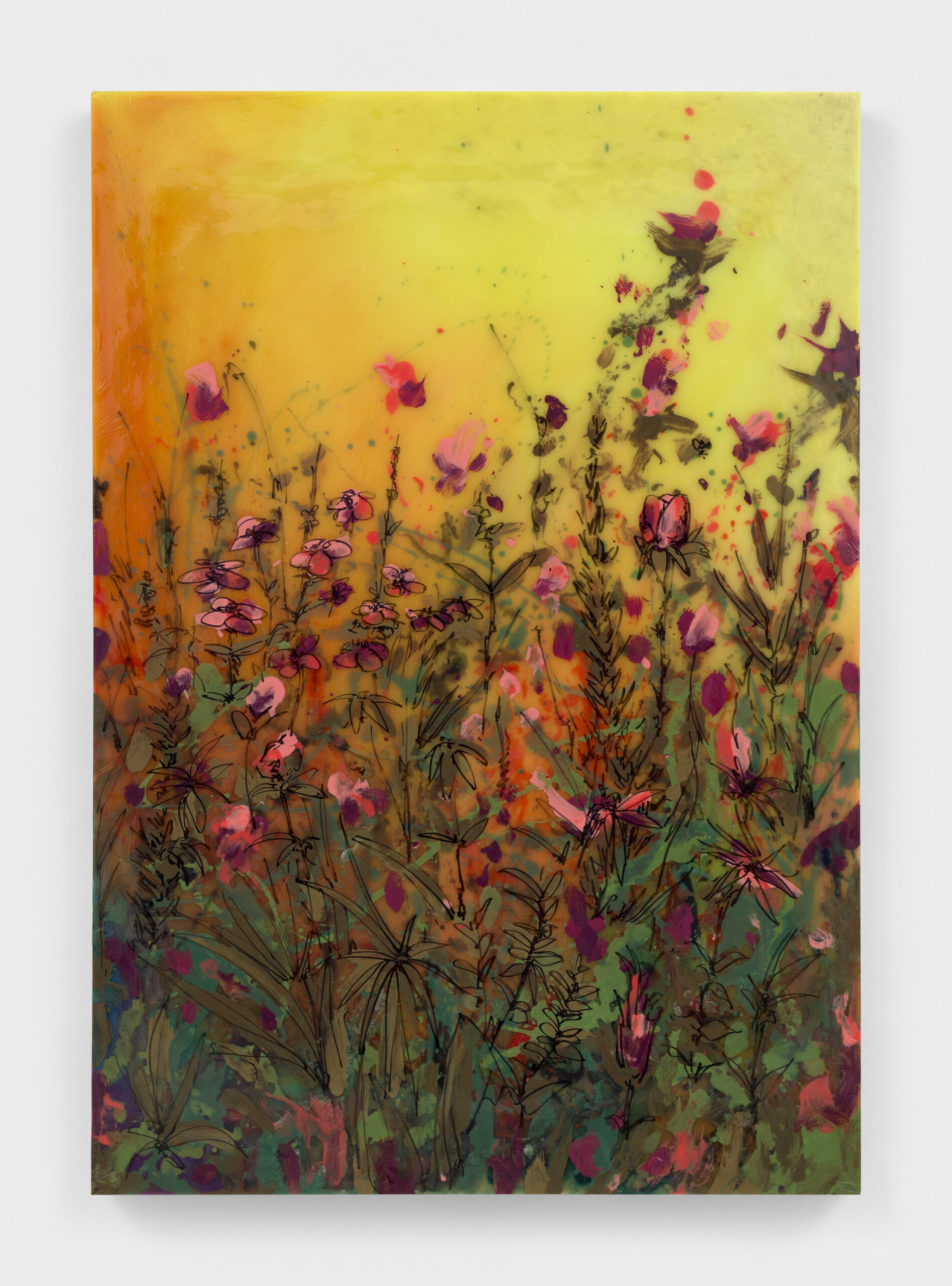
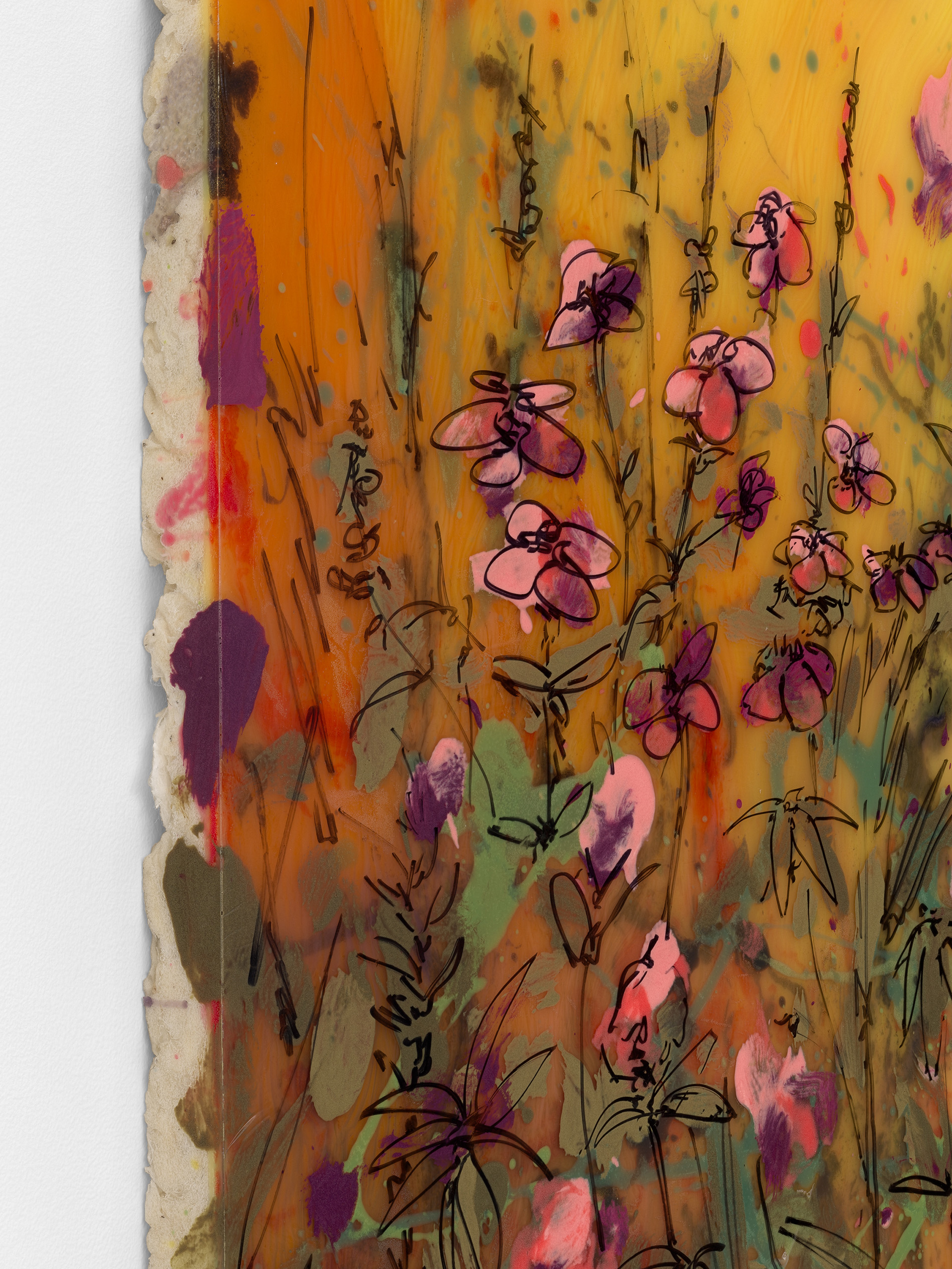
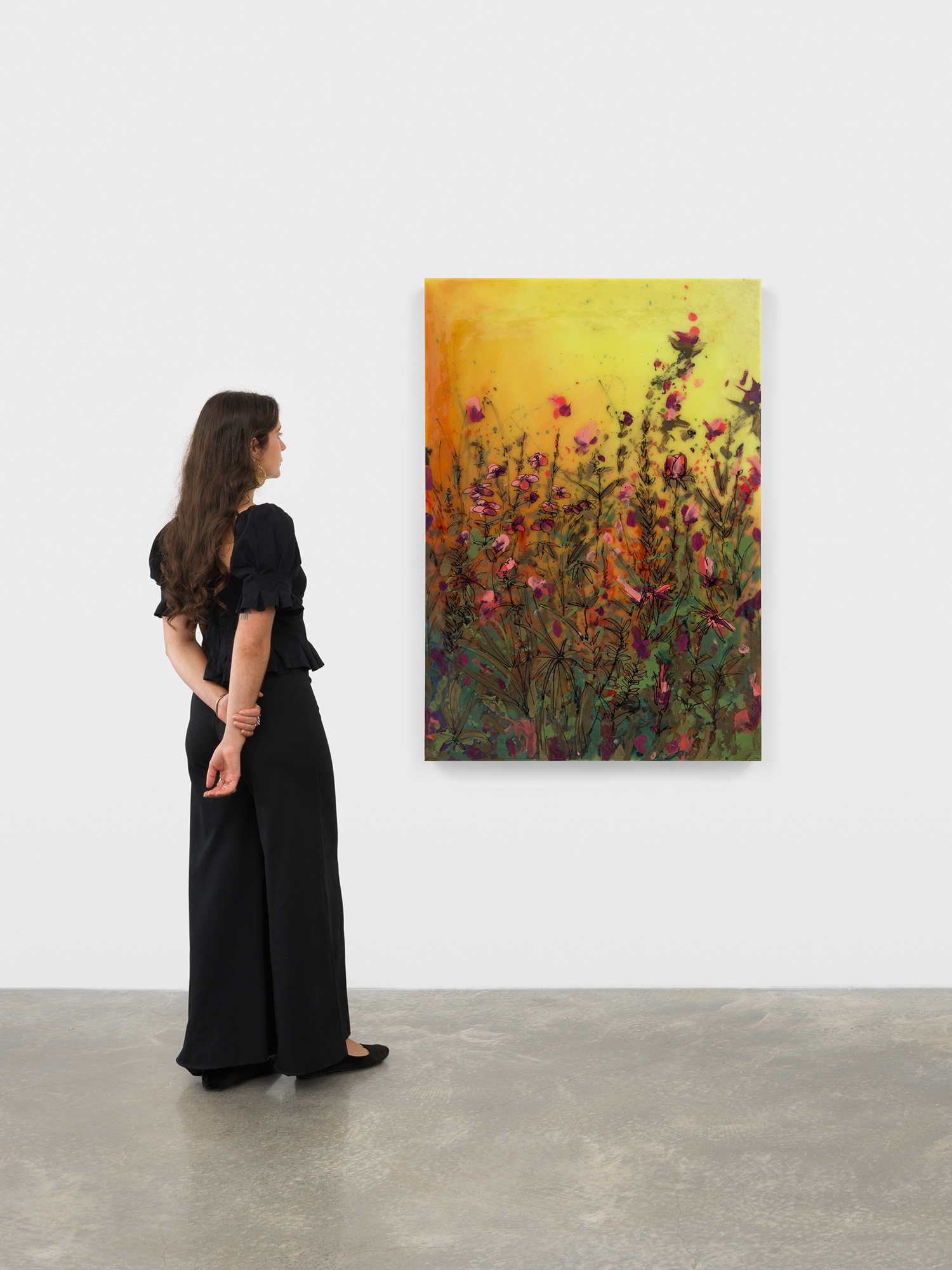
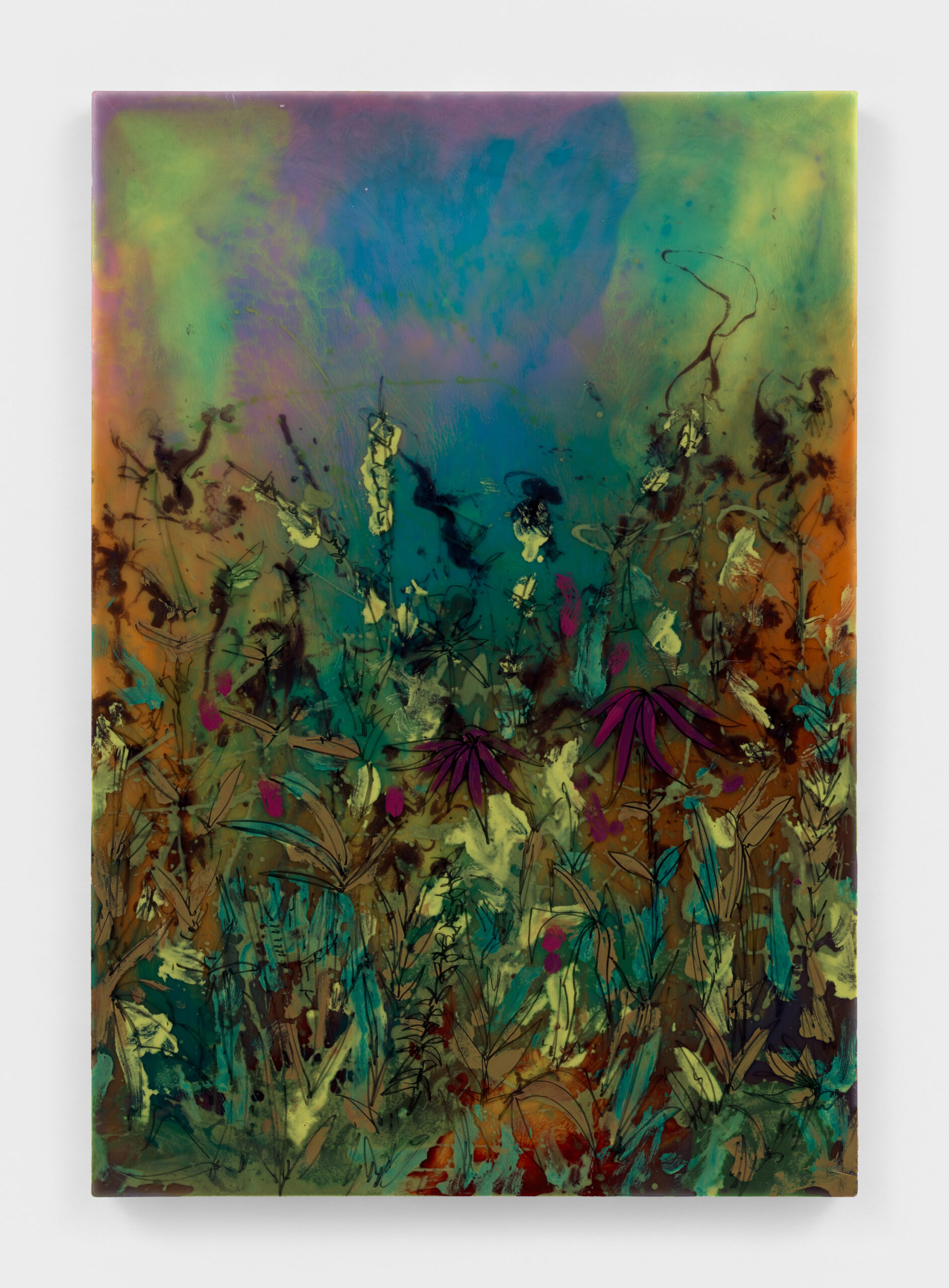
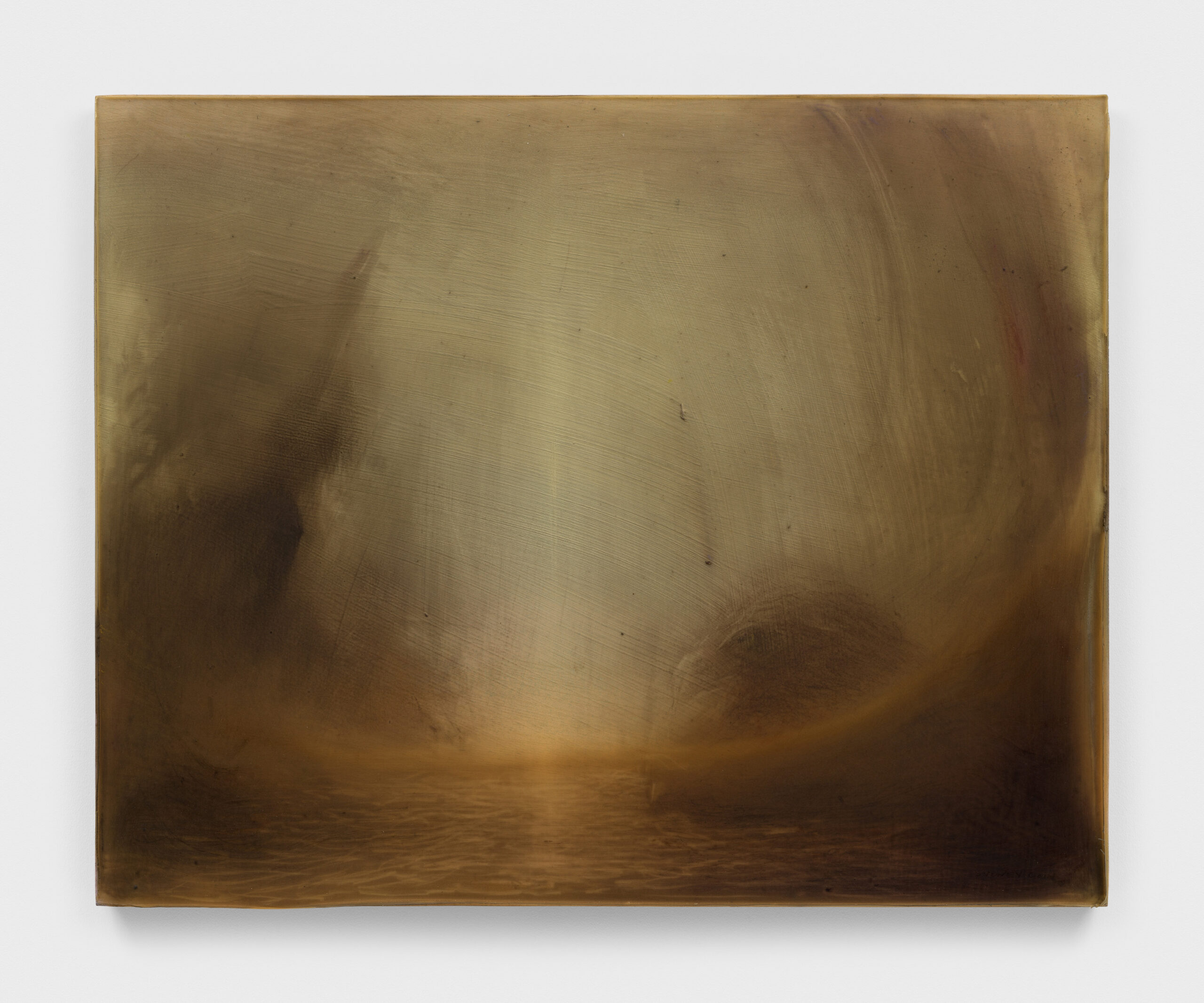
Garden V (In Light), 2026
Raw Virginia cotton, polyurethane resin, Sharpie transfer, fiberglass
52 x 36" / 132.1 x 91.4cm
![]()
![]()
Kevin Beasley’s (b. 1985, Lynchburg, VA) practice spans sculpture, photography, sound, video, and performance, while centering on materials of cultural and personal significance, from raw cotton harvested from his family’s ancestral property in southern Virginia to sounds gathered using contact microphones. Beasley alters, casts, and molds these diverse materials to form a body of works that acknowledge the complex, shared histories of the broader American experience, steeped in generational memories.
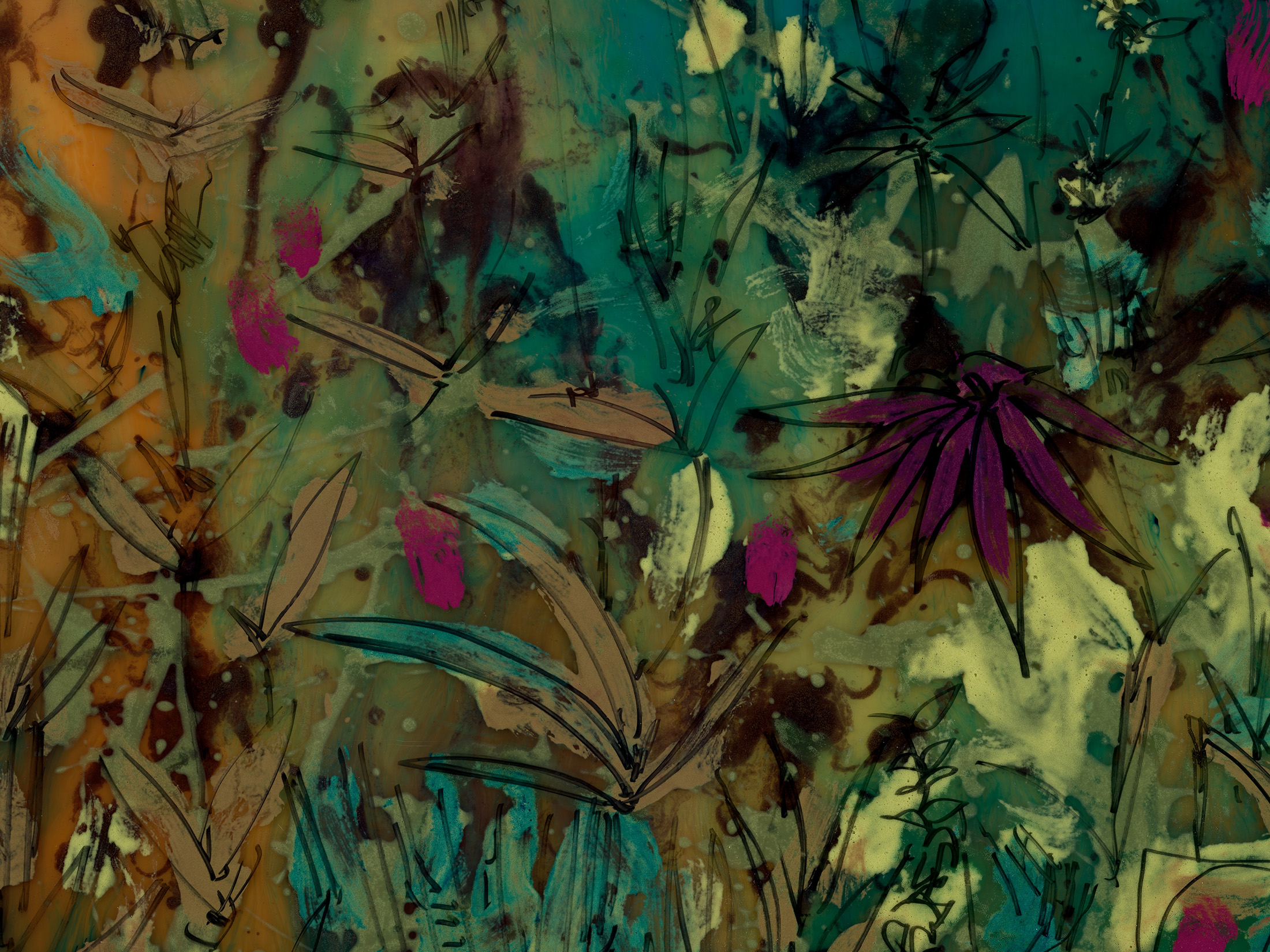
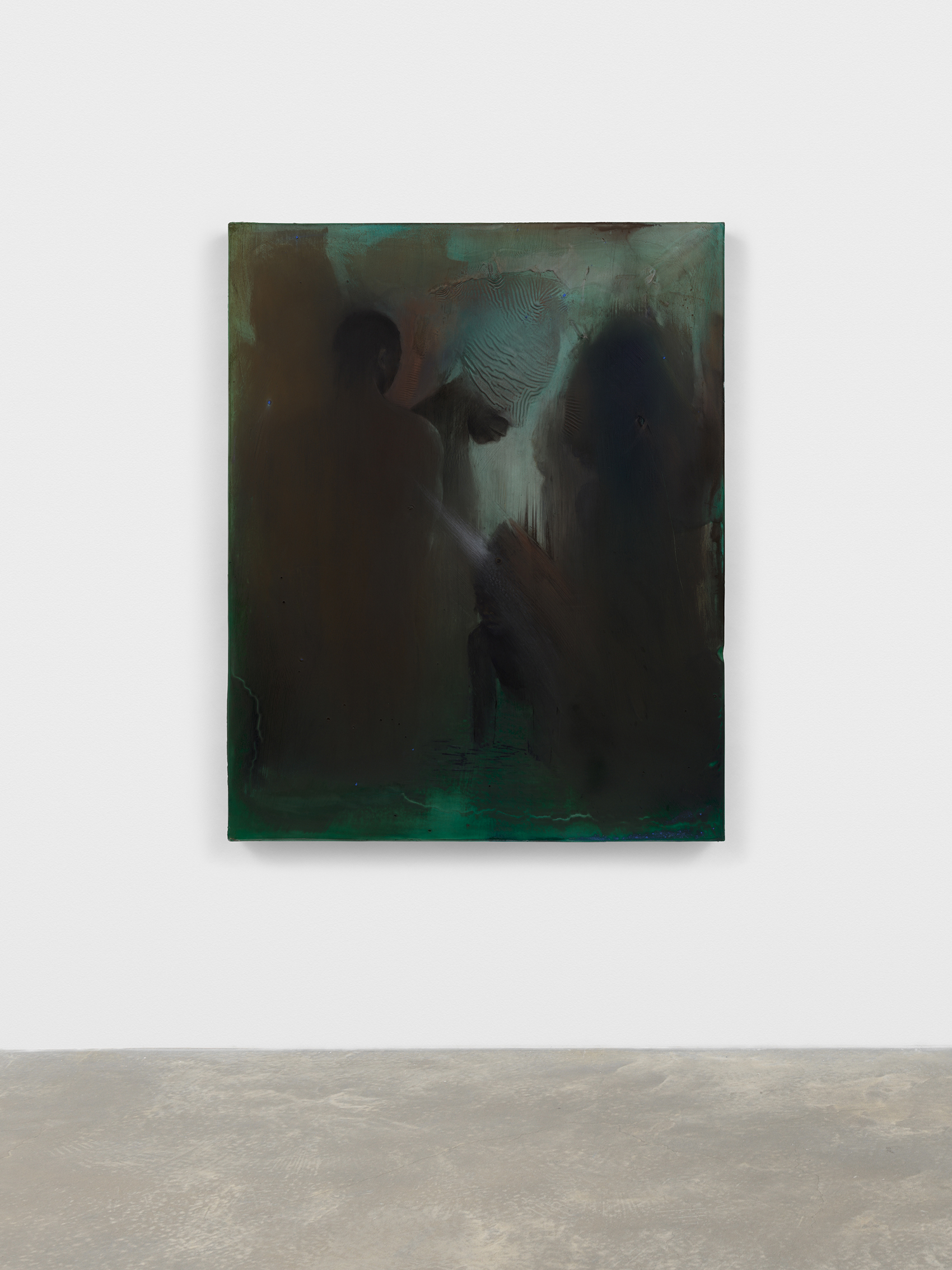
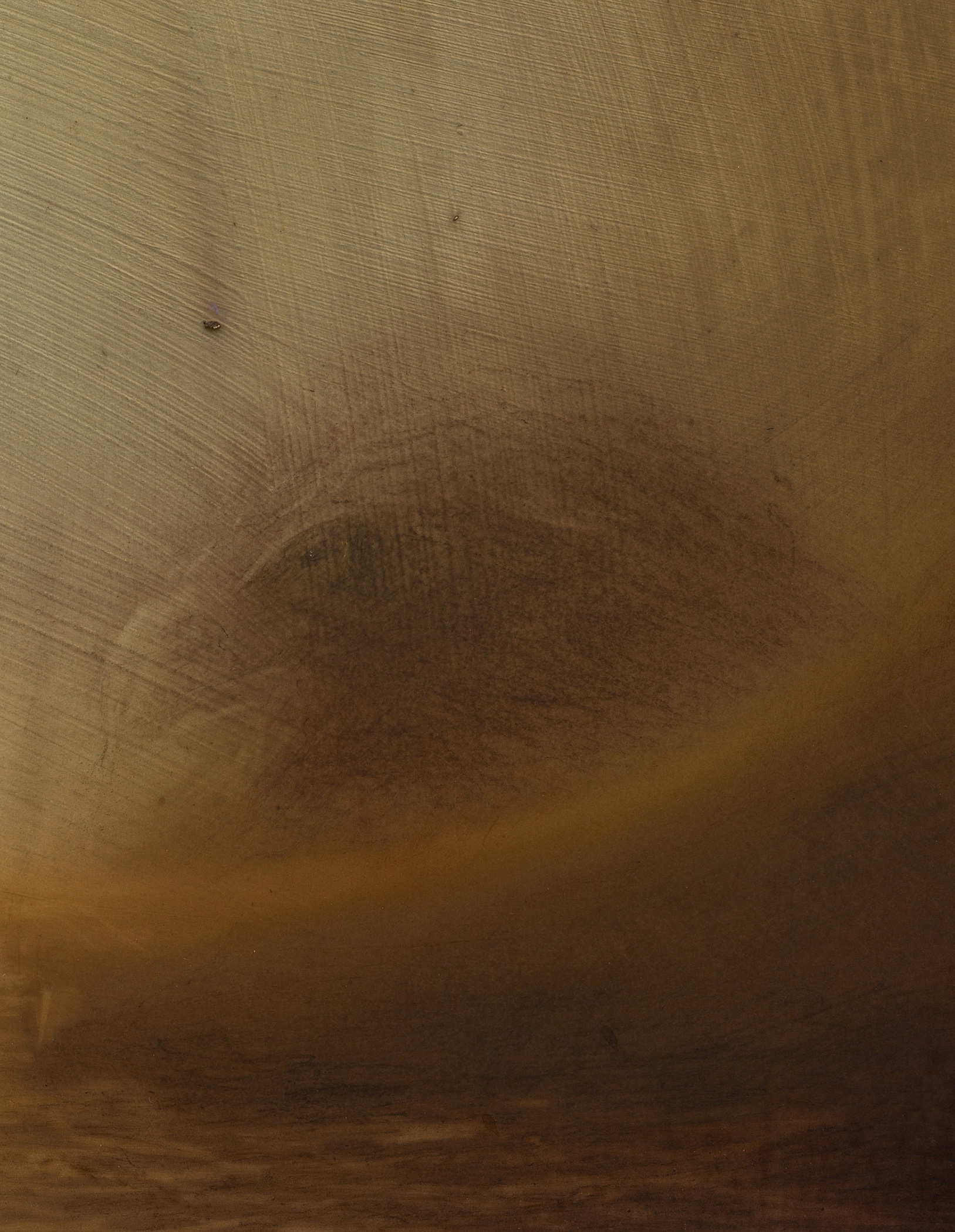
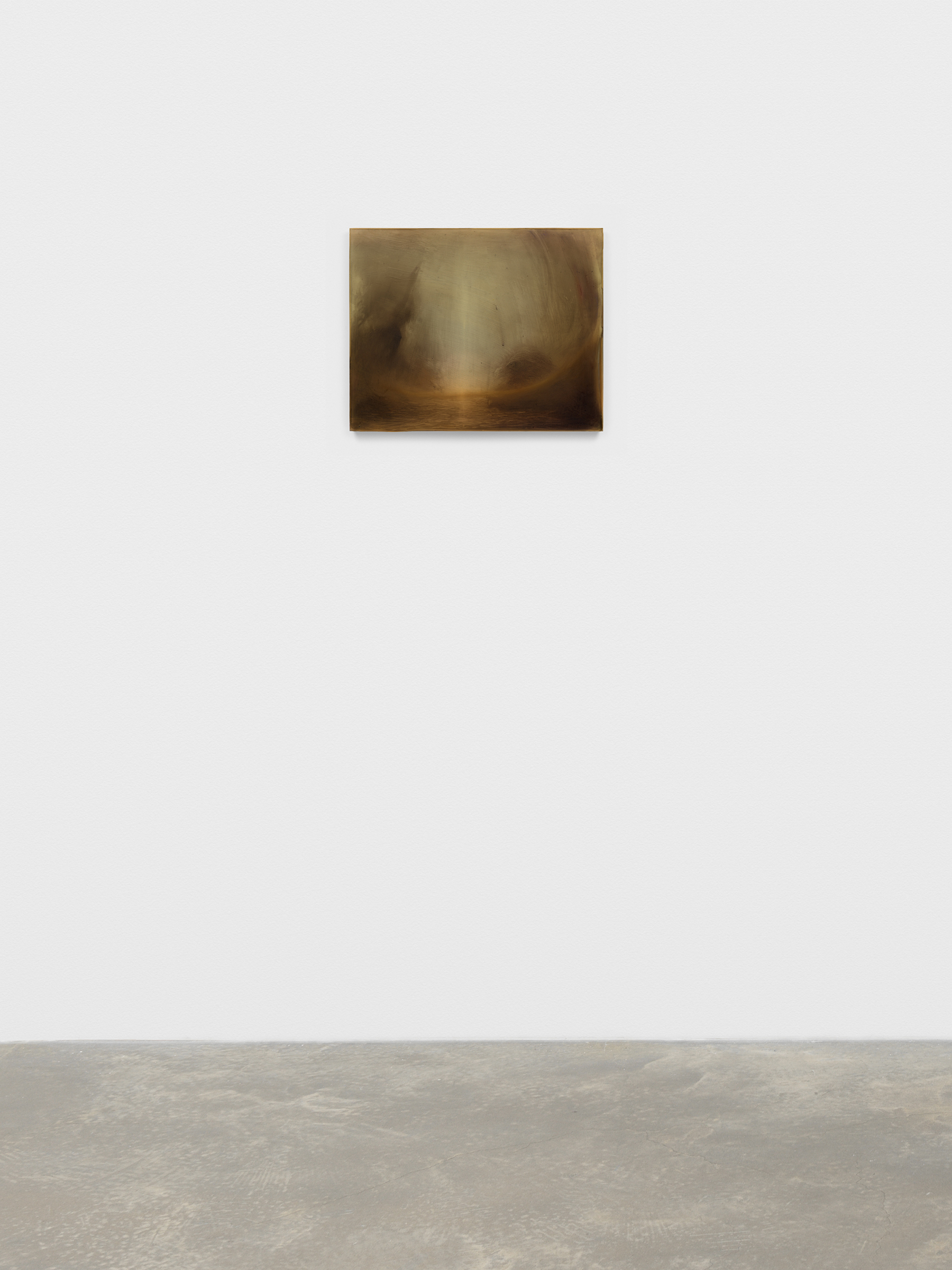
Garden V (In Light) and Garden IV (In Shadow) (2026) continues Kevin Beasley’s ongoing “slabs” series—sculptural paintings informed by the ancient tradition of relief sculpture that collapse memory, landscape, and atmosphere into layered fields of color and form.
Beasley renders past spaces from his mind’s eye. In each respective work, veils of deep blue-green, violet, radiant yellow, orange, and amber hover above dense thickets of stems, blooms, and tangled vegetation, creating the sensation of landscapes suspended between daylight and shadow. Rather than describing a specific place, Beasley conjures an emotional terrain shaped by recollection, atmosphere, and light. Across the surfaces, abstraction gradually gives way to pictorial narrative as material and drawing converge through resin casting and Sharpie transfers. Luminous washes of dyed resin are applied in brushstrokes, dabs, and flicks to evoke overgrown plant life, while gestural outlines of leaves and stems are drawn directly into the mold, embedding themselves into the surface as the resin cures. The resulting images appear both submerged and illuminated, as though viewed through shifting light.
Raw and dyed cotton form the foundation of these works, which stem from Beasley’s sustained observation of light and atmospheric color on his family’s century-old property in rural Virginia. Home to generations of the Beasley family, the land functions as both a site of gathering and an enduring material source within the artist’s practice. This ongoing engagement with cultivated landscapes also extends beyond the studio through Beasley’s stewardship of a public garden in New Orleans’ Lower Ninth Ward, where ideas of care, memory, and communal space continue to inform his approach to the garden as both subject and lived environment.
![]()
Kevin Beasley
Garden IV (In Shadow), 2026
Raw Virginia cotton, polyurethane resin, Sharpie transfer, fiberglass
52 x 36" / 132.1 x 91.4cm
![]()
Kevin Beasley
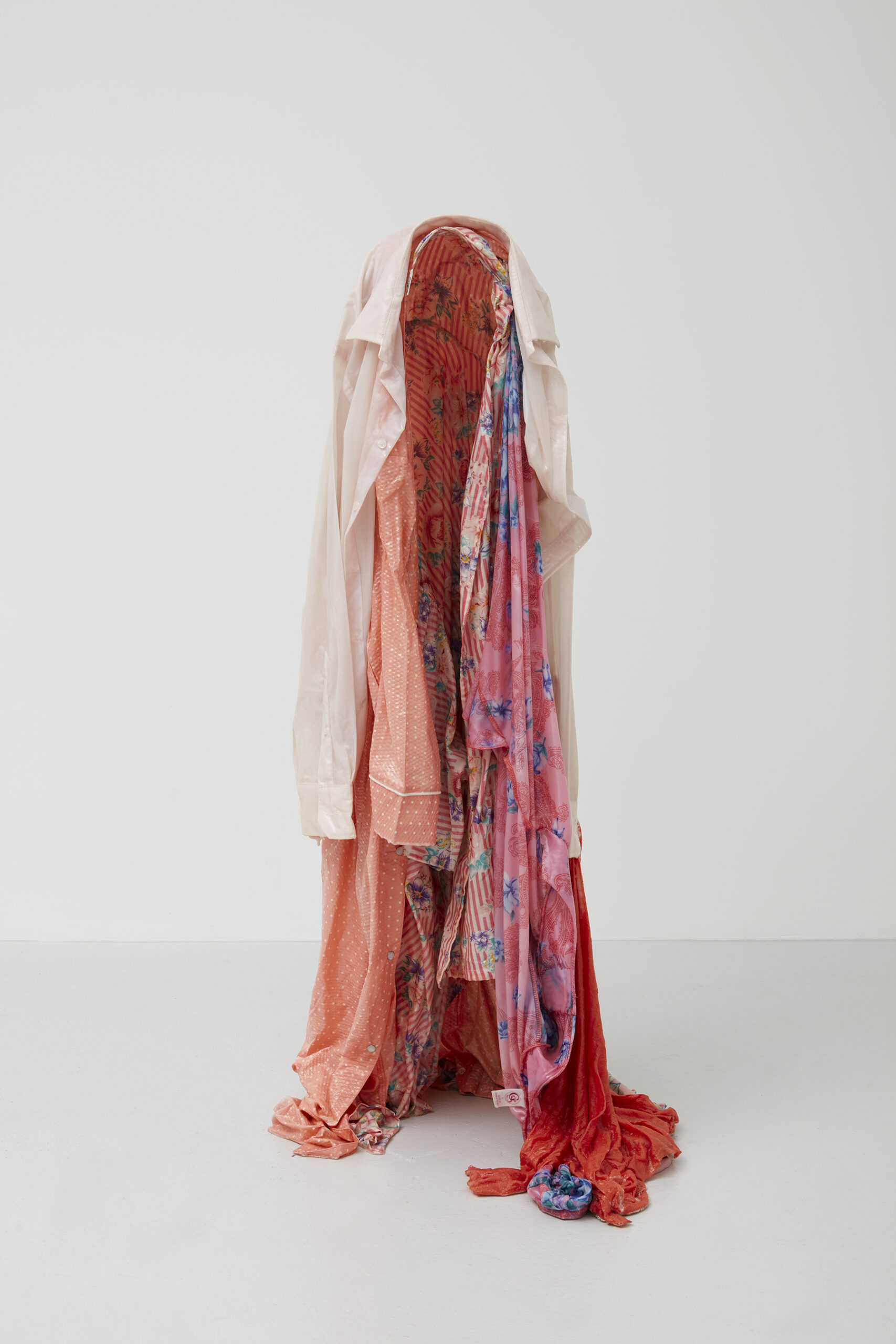
Untitled, 2020
"Aid-to-trade" garments, housedresses, resin
47.6 x 25.5 x 15" / 121 x 65 x 38cm
![]()
![]()
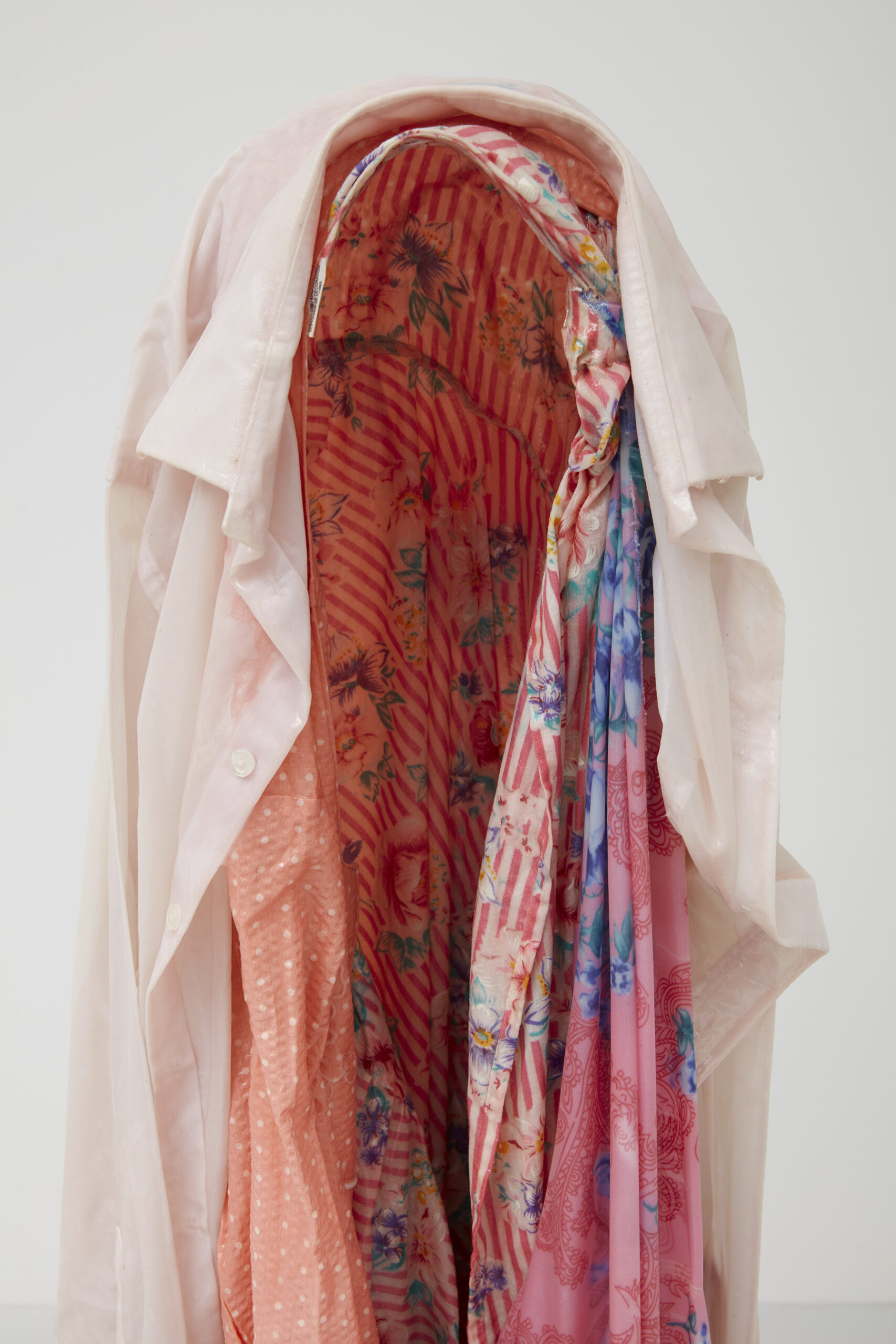
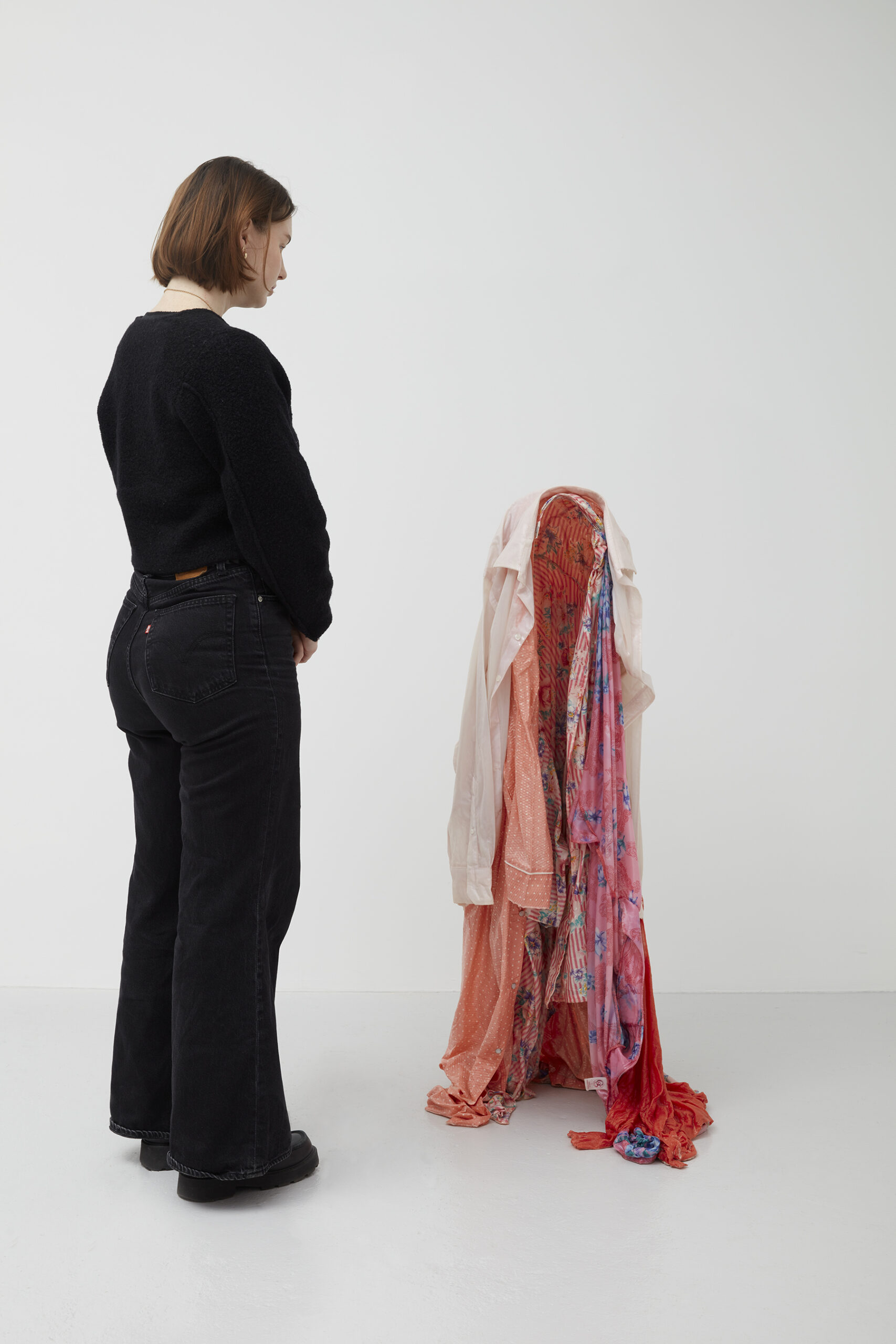
Beasley presents Untitled (2020), a work created during his month-long residency at the A4 Arts Foundation in Cape Town, South Africa in 2020. Using a housedress and “Aid-to-trade” garments— donated American clothing that has transitioned from charitable purpose to commercial circulation in South Africa’s economy—Beasley saturates the clothing in resin, summoning an apparition of the figure who once wore them. This work subtly reframes the history of cotton to address a local economic truth: Africa is a net exporter of cotton, and at the same time, a net importer of textiles and clothing, most notoriously of Western cast-offs.
As part of a larger series of “ghosts” that began in 2015, this work reveals an invisible presence made visible through a process in which clothing is coated with resin and draped over an individual foam sphere. Working in real-time, dependent upon the temporal confines of his materials, Beasley removes the mold just as the resin begins to cure, while the garments remain solidified in space—hardened around the hollow shape of a figure. Beasley blurs the line between object-hood and personhood, gesturing to the trace of the body and asking what these fragments might suggest about lives and the living. His own body is inscribed in the sculpture as he shapes it while the resin sets, but other bodies are present too—absent bodies suggested by the materials used: clothes once worn by others or meant for others before they arrived in the artist’s studio.
![]()
Sydney Cain
one of the seven realms of the ocean i swam through before reaching the womb again, 2026
Acrylic, pigment, soft pastel and metalpoint on wood
60 x 48" / 152.4 x 121.92cm
![]()
Sydney Cain (b. 1991, San Francisco, CA) traces the collective consciousness of communities in what they call metaphysical landscapes. Cross-generational groups move through a ruptured space steeped in myth and the history of the African Diaspora, seeking connection and renewal. By recasting personal and collective histories of joy, celebration, loss, and grief, the artist rebuilds narratives that honor generations past, present, and future. In a process of gradual unveiling, Cain sculpts, rubs, and erases dense layers of pigment to render experiences beyond a visible plane. This layered approach evokes the instability of memory and the porous boundary between the visible and the unseen while revealing Blackness as both subject and state of being.
Silhouetted figures descend into and merge with emerald-green water in one of the seven realms of the ocean I swam through before reaching the womb again (2026). Emerging through dense veils of deep green—the first time the artist has used the color so prominently—alongside fields of black and amber pigment, the bodies appear partially submerged, dissolving into a shadowed and atmospheric terrain. Water recurs throughout Cain’s work as an emblem of transformation and the persistence of life across submerged histories. Near the center of the composition, a fish flashes briefly into view beneath a passage of light, while concentric ripples and reflective surfaces move across the painting like traces of memory. Elsewhere, rippling patterns veil a figure like a ceremonial head covering, evoking generational traditions and unseen movement beneath the painting’s stratified, viscous surface.
Hovering between concealment and emergence, the figures gather within a realm where water, memory, and spirit converge. Cain’s labor-intensive treatment of material—working pastel and acrylic into and beneath dense passages of pigment, then pulling color back across the surface through cycles of erasure and reworking—allows bodies to blur into their surroundings, emphasizing the fluid and often elusive nature of inheritance and collective remembrance. Luminous passages and obscured forms create a depth that feels at once terrestrial and underwater, as though these inhabitants exist within a space suspended outside linear time.
![]()
![]()
![]()
Sydney Cain
stepping into tomorrow / oceans crown, 2026
Acrylic, pigment, soft pastel, graphite and metalpoint on wood
48 x 60" / 121.92 x 152.4cm
![]()
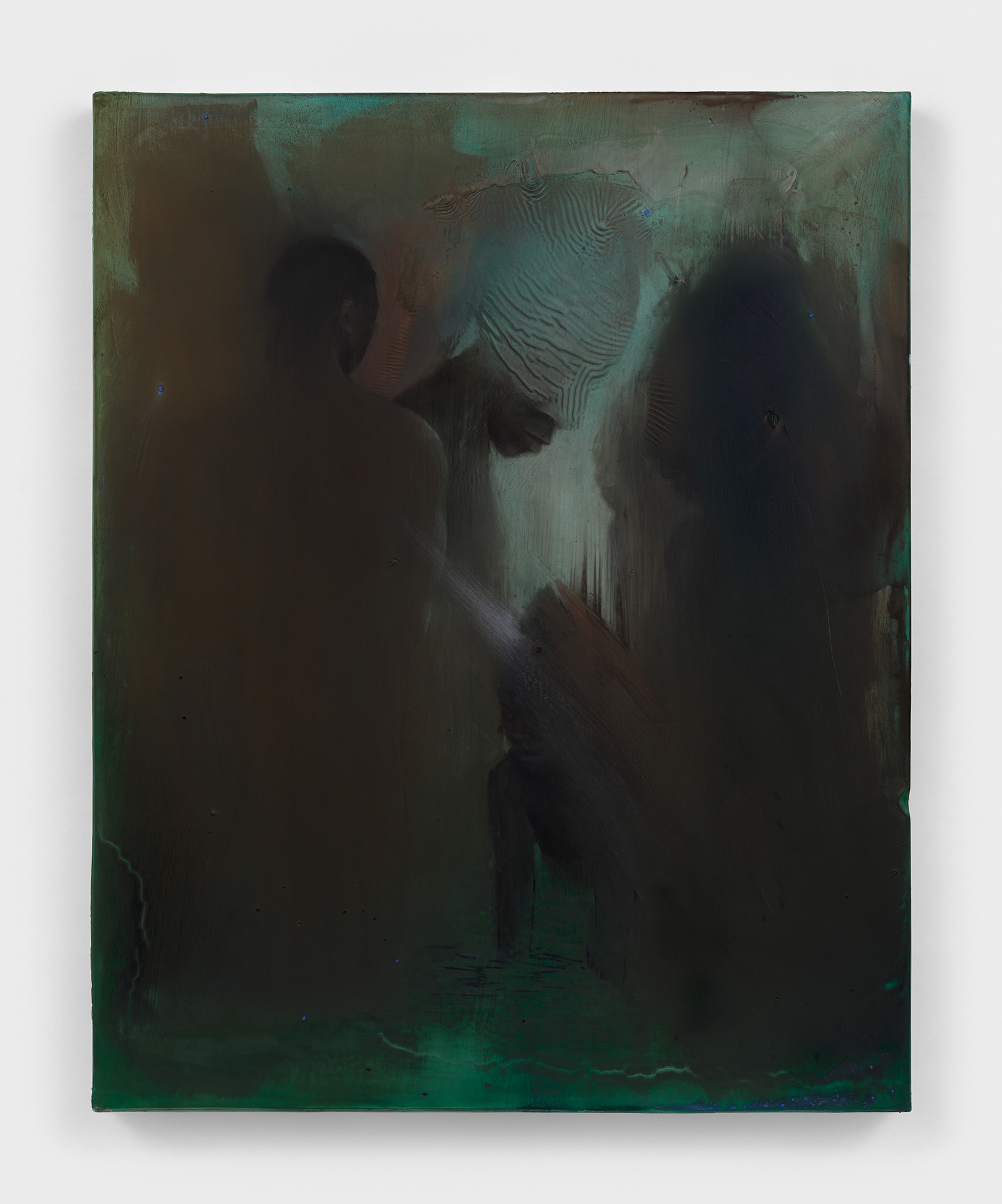
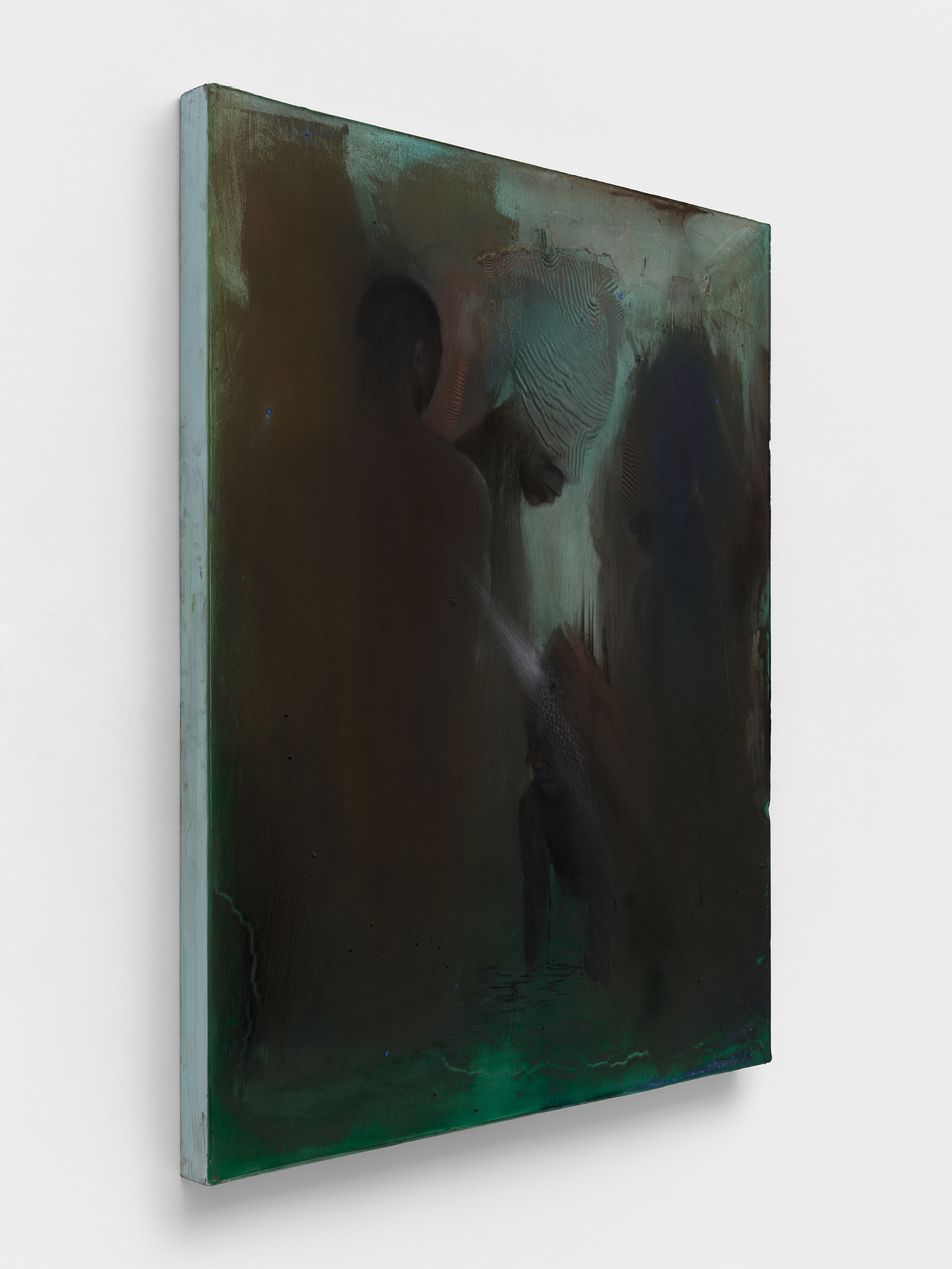
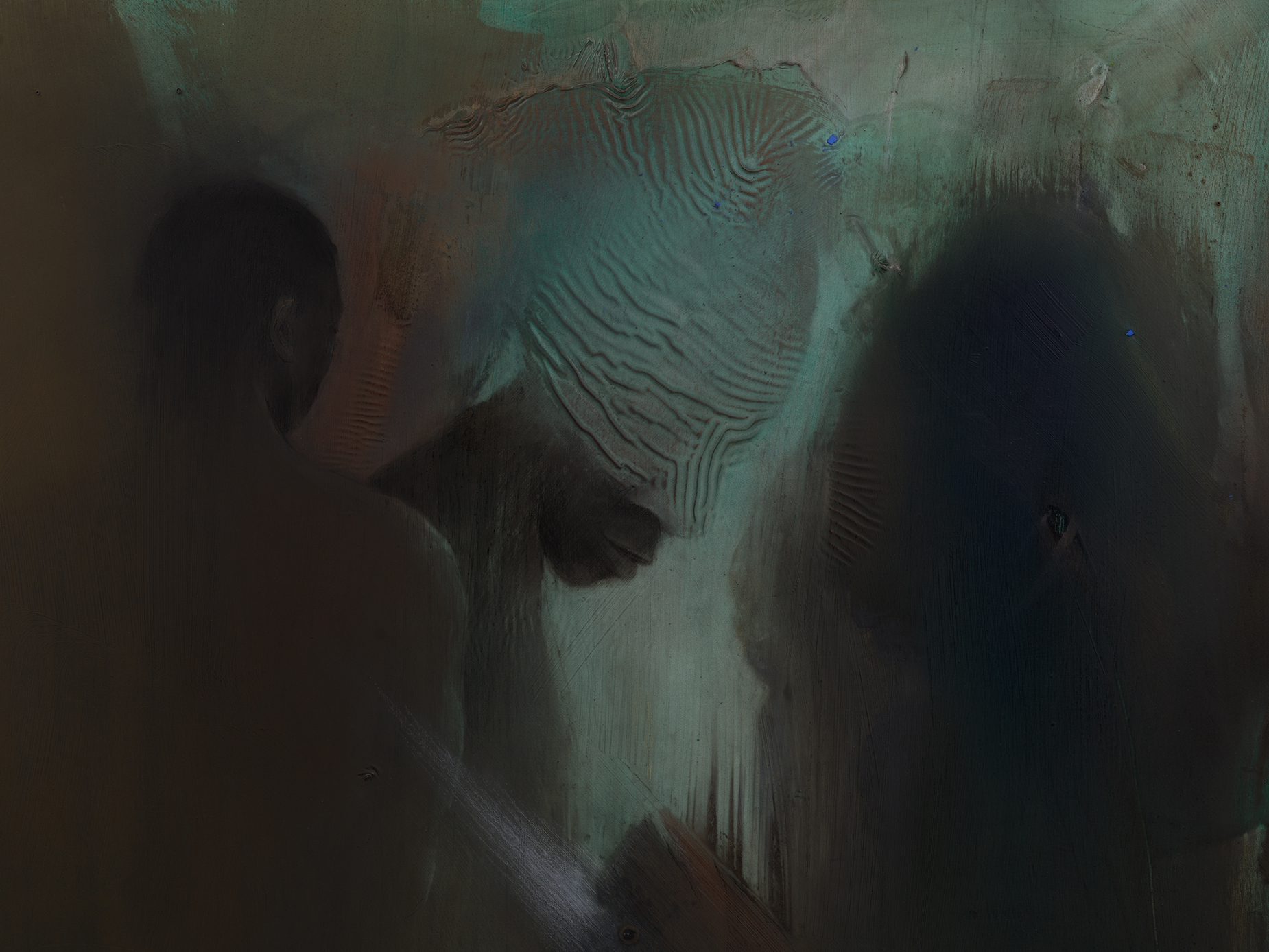
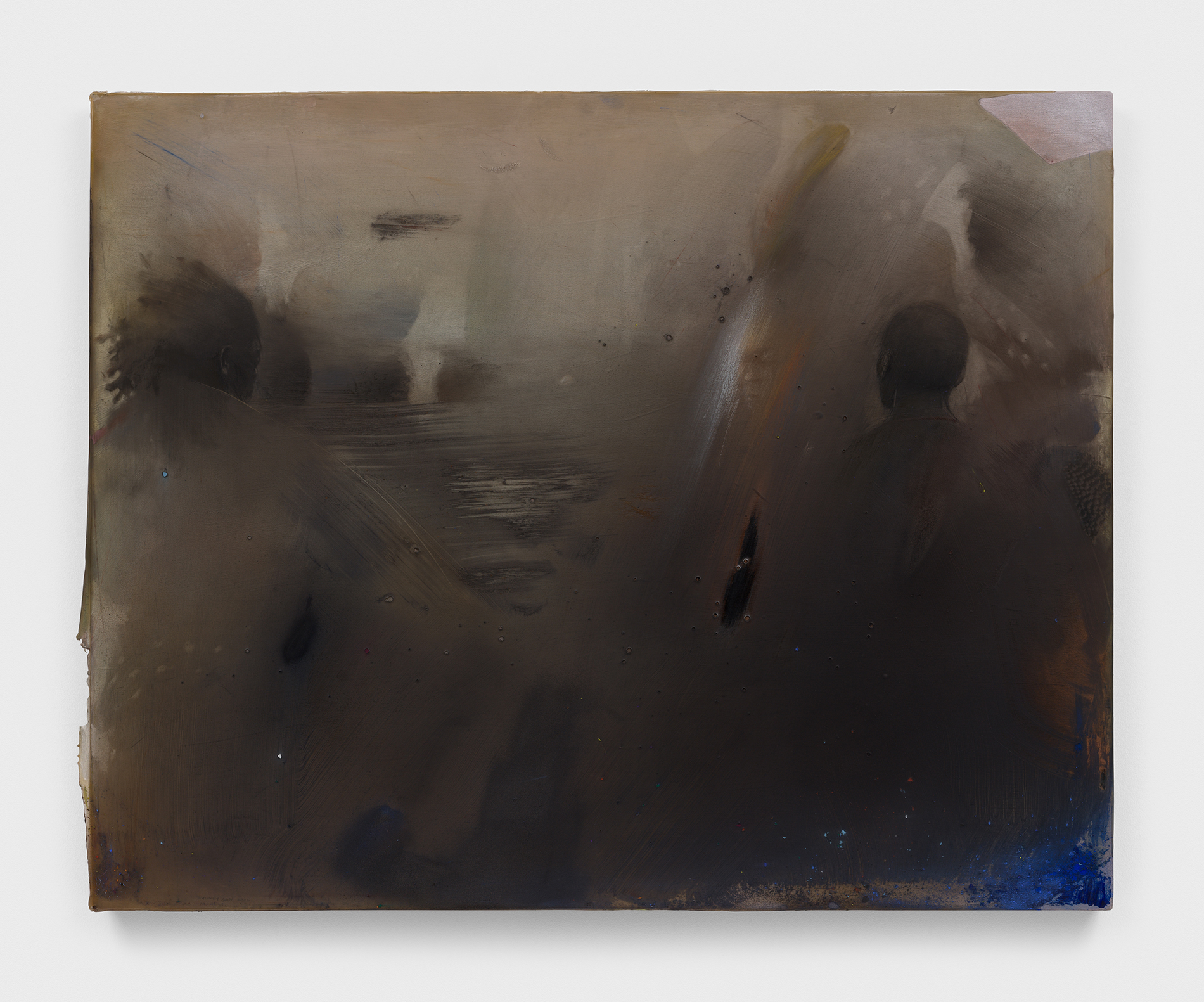
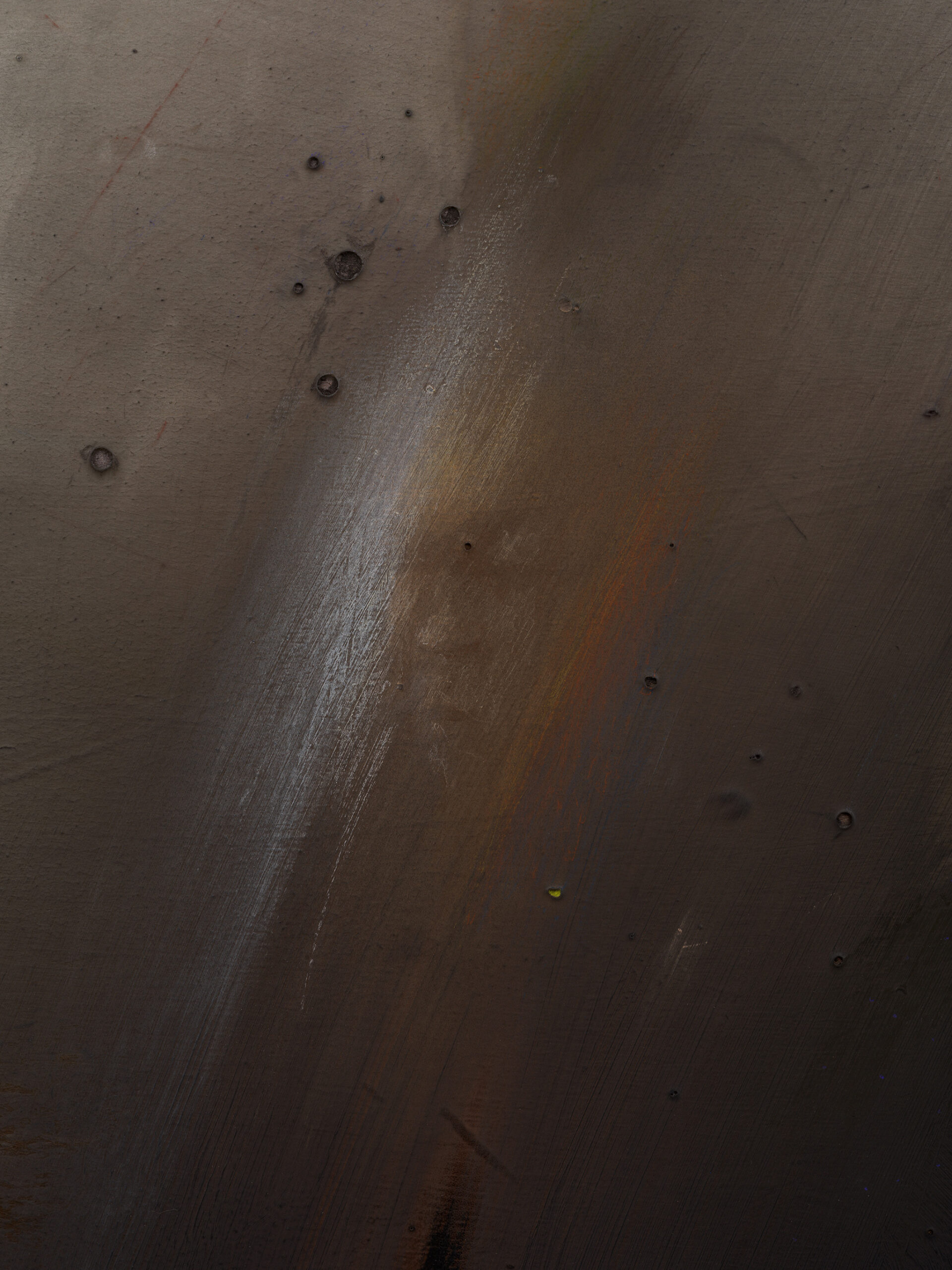
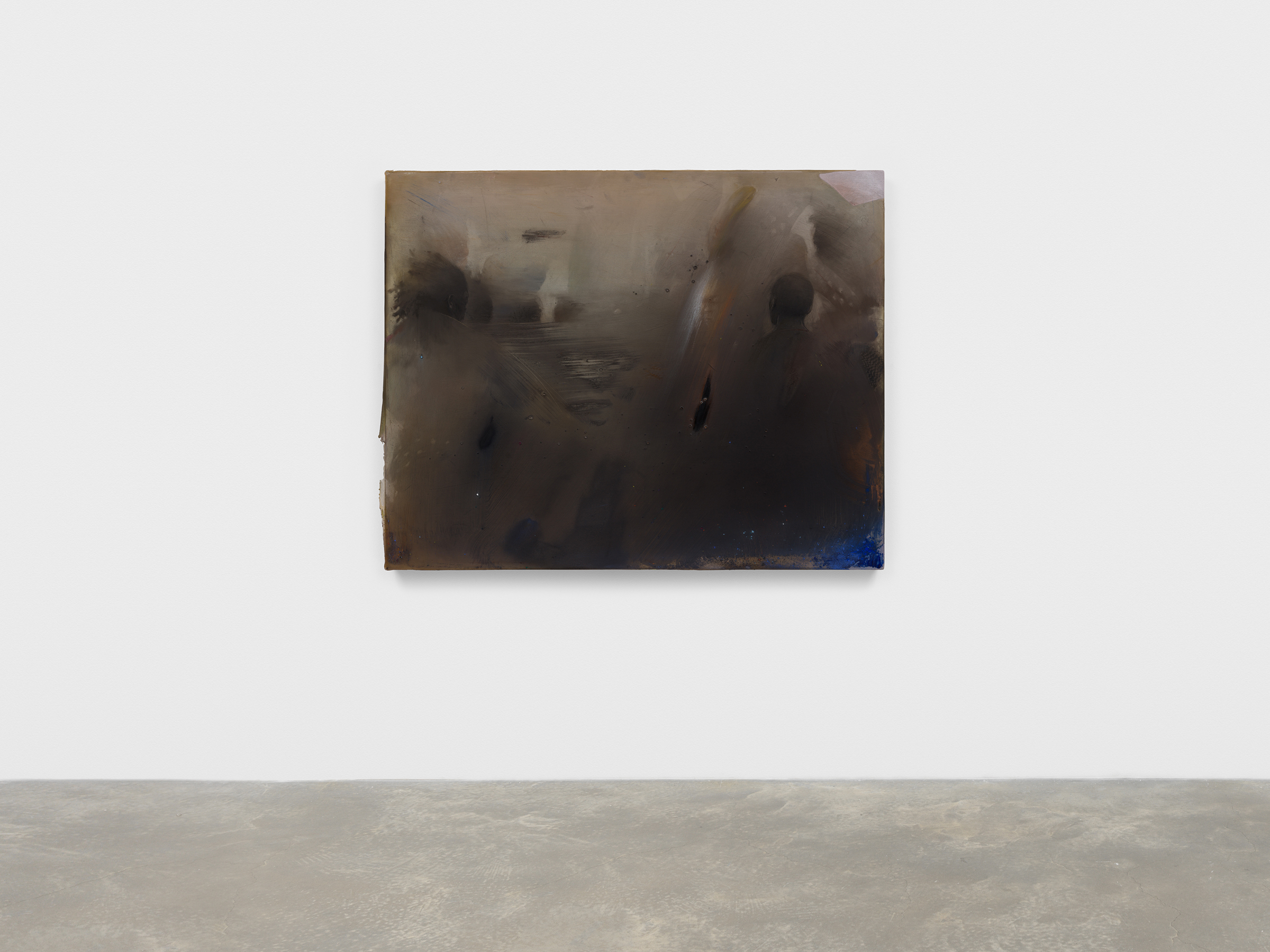
In stepping into tomorrow / oceans crown (2026), shadowed figures emerge from a dense atmospheric field of smoky browns, muted blacks, and flickers of deep blue. The composition unfolds as a threshold space where bodies gather, dissolve, and reappear within a hazy, aqueous environment. At the left edge of the painting, a loosely rendered figure turns toward the center of the composition, while a silhouette at right stands partially illuminated beneath a faint veil of light. Flanking this figure are spectral entities marked by a static-like pattern that obscures their features; this recurring motif appears throughout Cain’s work as though the same figures drift between the artist’s transcendent landscapes. Elsewhere, blurred forms and gestural traces suggest additional presences—human, animal, and flora alike—moving through fog, water, and memory within the layered surface of the work itself. Floating between emergence and disappearance, these forms cycle through washing, growth, and degeneration, echoing the rhythms and continual transformation of the natural world.
Cain’s labor-intensive treatment of material mirrors this process of transformation. Cain works pastel and acrylic into and beneath dense passages of pigment, then pulls pigment back across the surface through a pattern of erasure and reworking. Bodies, head coverings, and garments hover at the edge of recognition, while softly luminous passages and sweeping marks generate a palpable sense of movement and otherworldy charge. The title positions the ocean as an enduring heirloom, carrying histories of loss, survival, and renewal across generations, while the figures’ gradual emergence gestures toward collective becoming and the persistence of memory over time.
![]()
![]()
Sydney Cain
raptures, 2026
Acrylic, pigment and soft pastel on wood
16 x 20" / 40.64 x 50.8cm
The composition of raptures (2026) is distilled to an elemental encounter between light, atmosphere, and landscape. A radiant horizon emerges from a dense field of smoky brown, amber, and black pigment. At the left edge of the painting, a shadowed form hovers at the threshold of visibility while sweeping arcs of pigment move across the surface like currents, wind, or waves. On the right, the profile of a bird of prey appears just above the line where water meets sky, its delicate features revealed by Cain’s process of adding layers of acrylic, pigment, and soft pastel, then selectively removing them.
Moving fluidly between abstraction and representation, the work privileges sensation over fixed narrative. The title, raptures, evokes both transcendence and emotional rupture, while also echoing “raptor,” another name for a bird of prey. This slippage in meaning suggests a departure from direct storytelling, instead conjuring the unstable logic of a half-remembered dream or fragmented oral tradition.
![]()
![]()
![]()
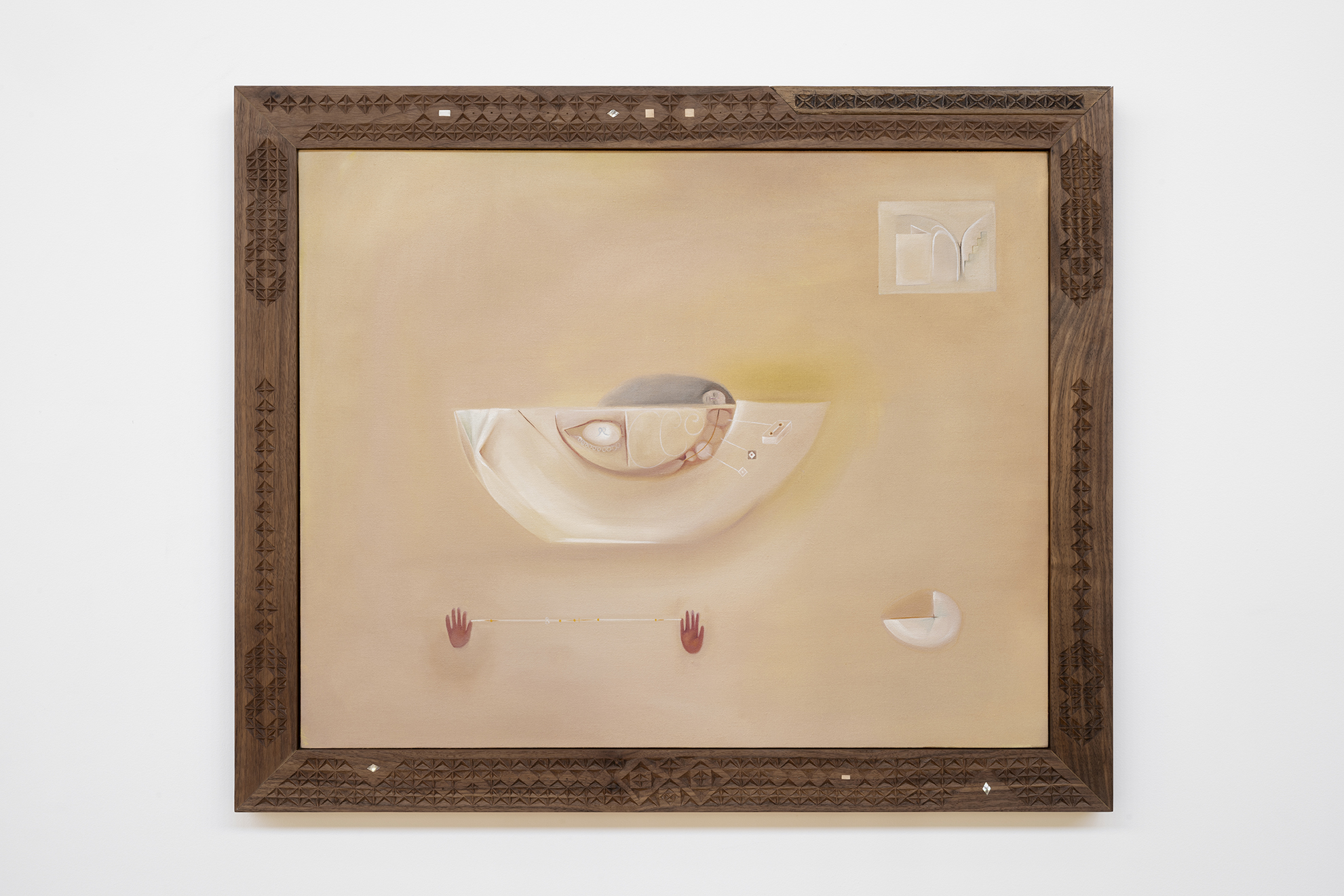
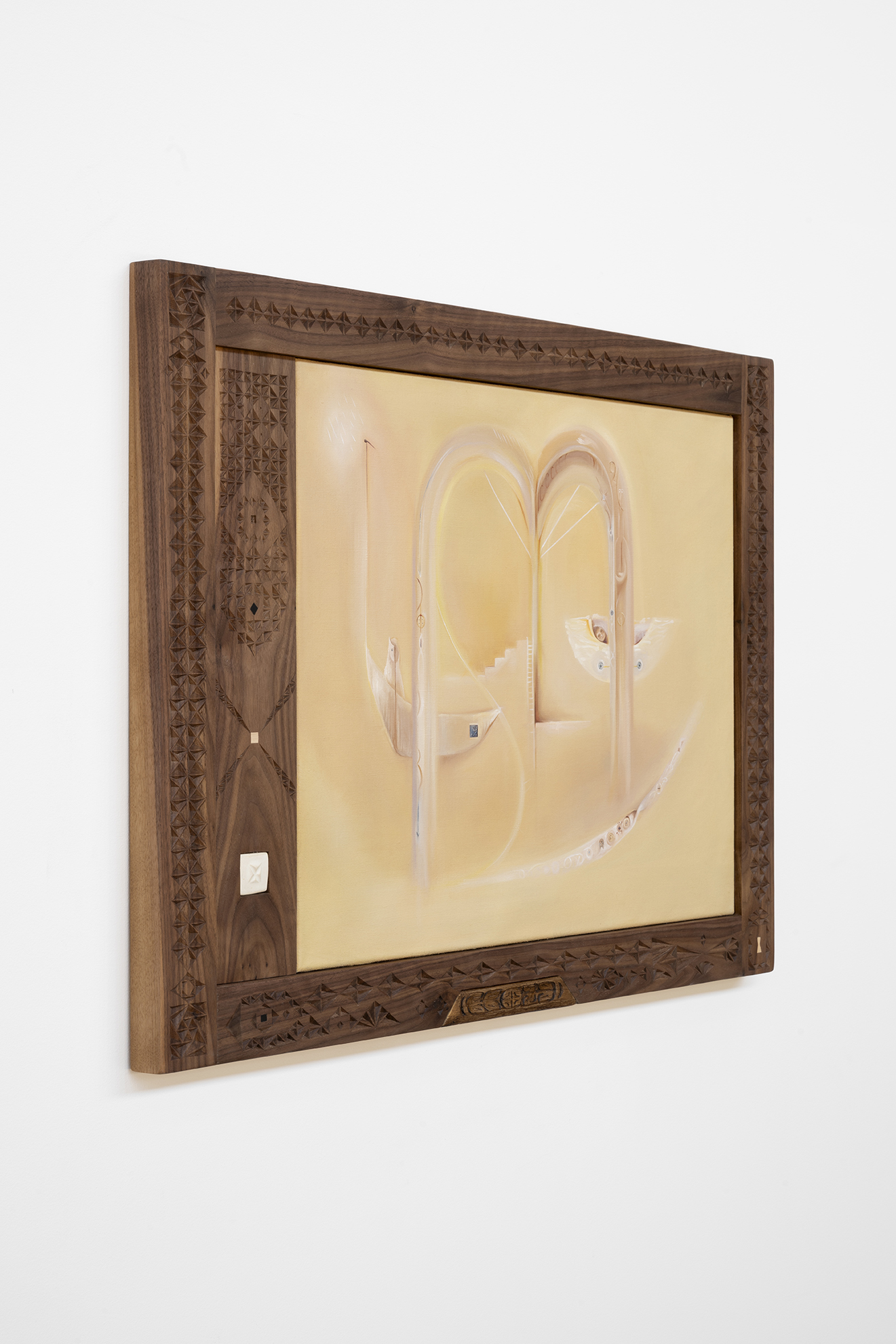
Patricia Fernández Carcedo
Blue-print, 2026
Oil on linen, hand-carved walnut, hand-carved pine by José Luis Carcedo, bone, alder, abalone shell
29 x 35 x 2” / 73.8 x 89 x 5cm
![]()
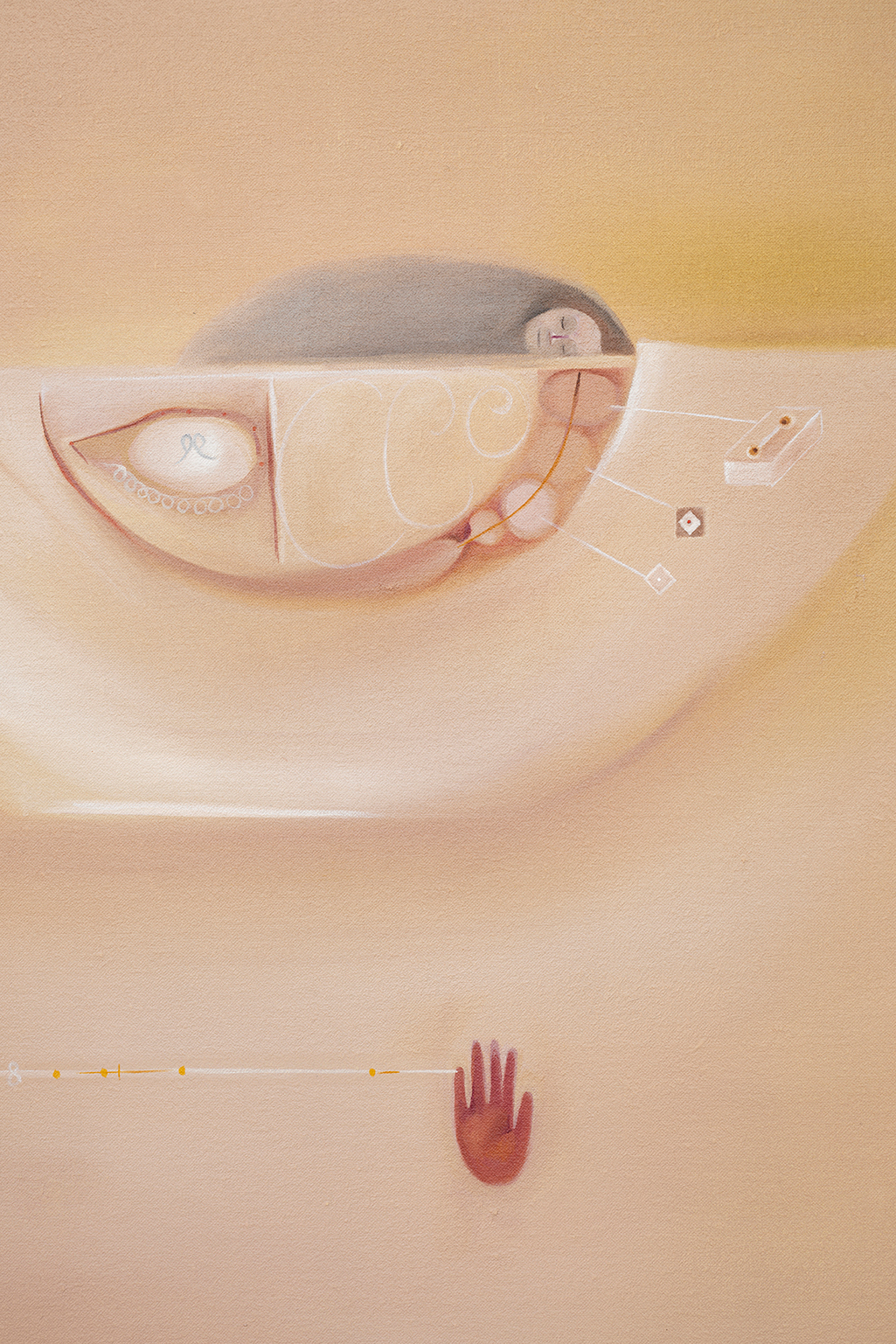
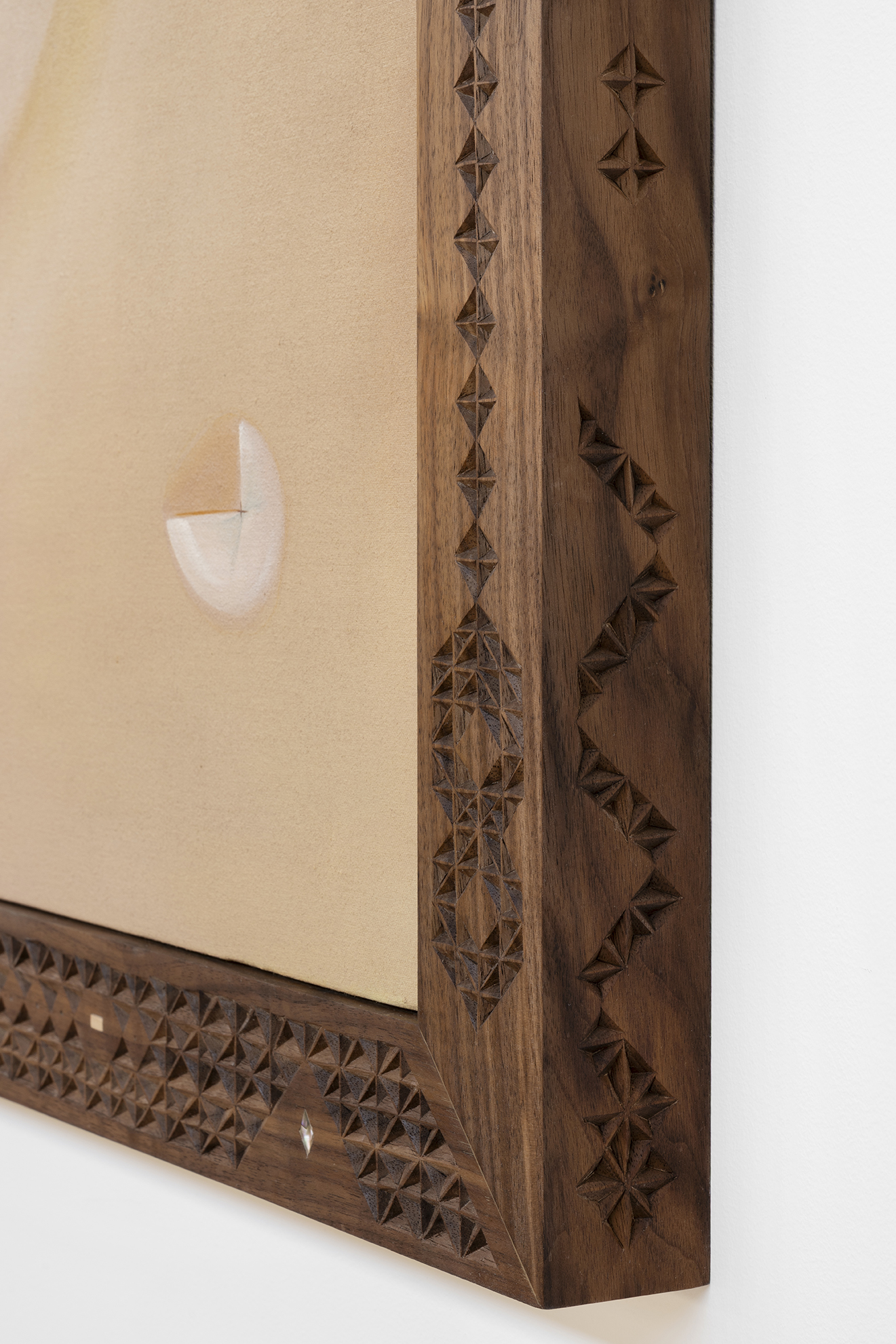
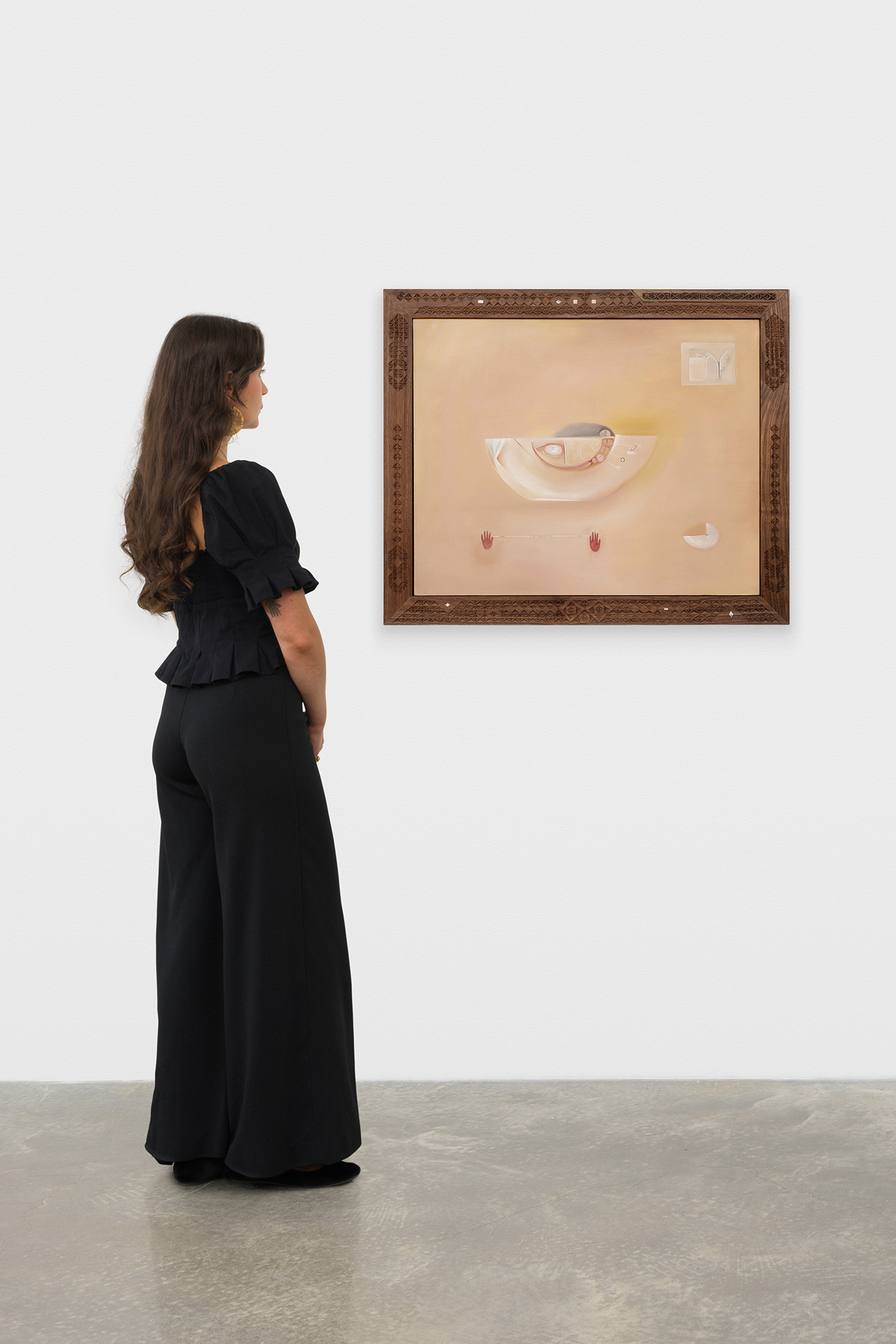
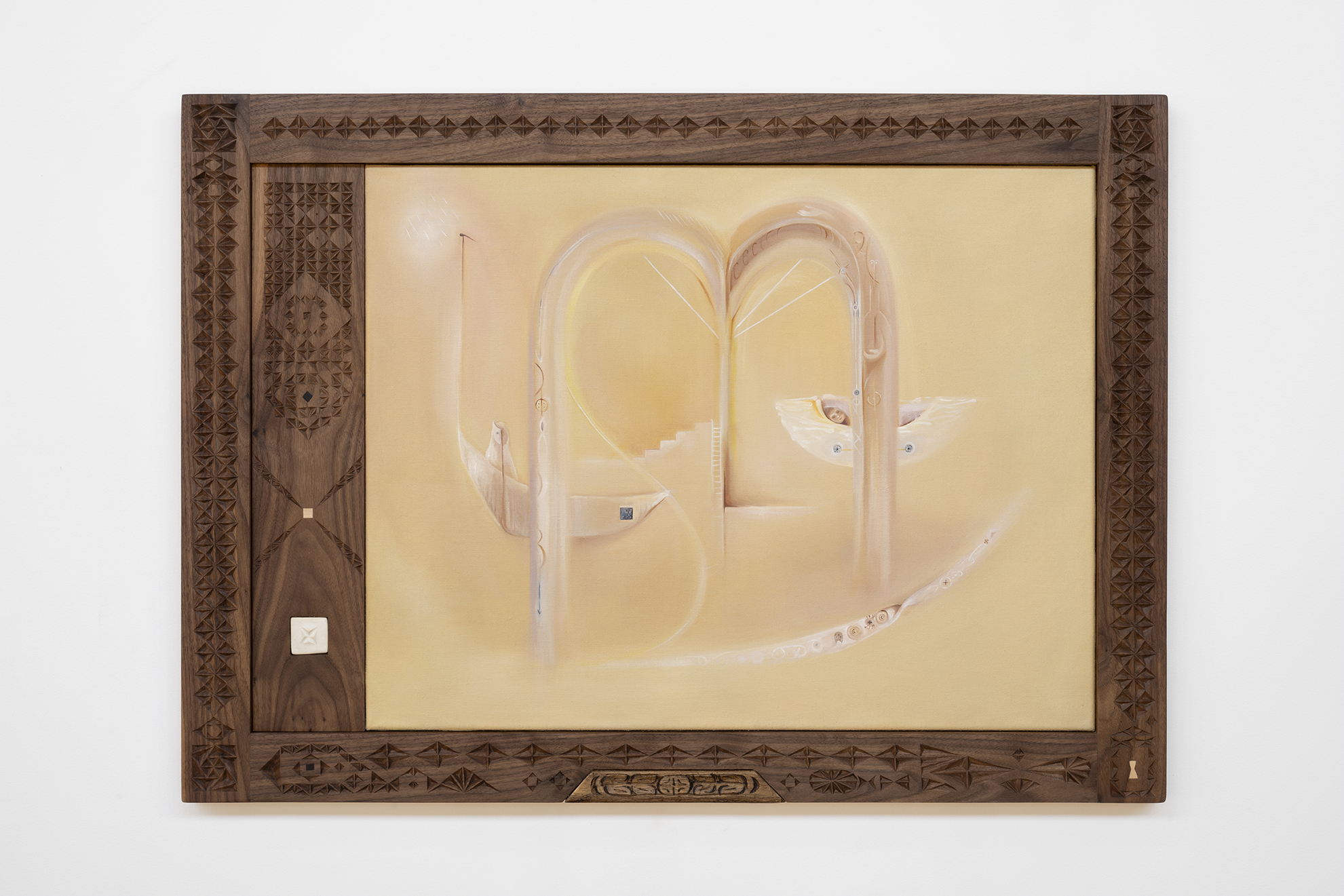
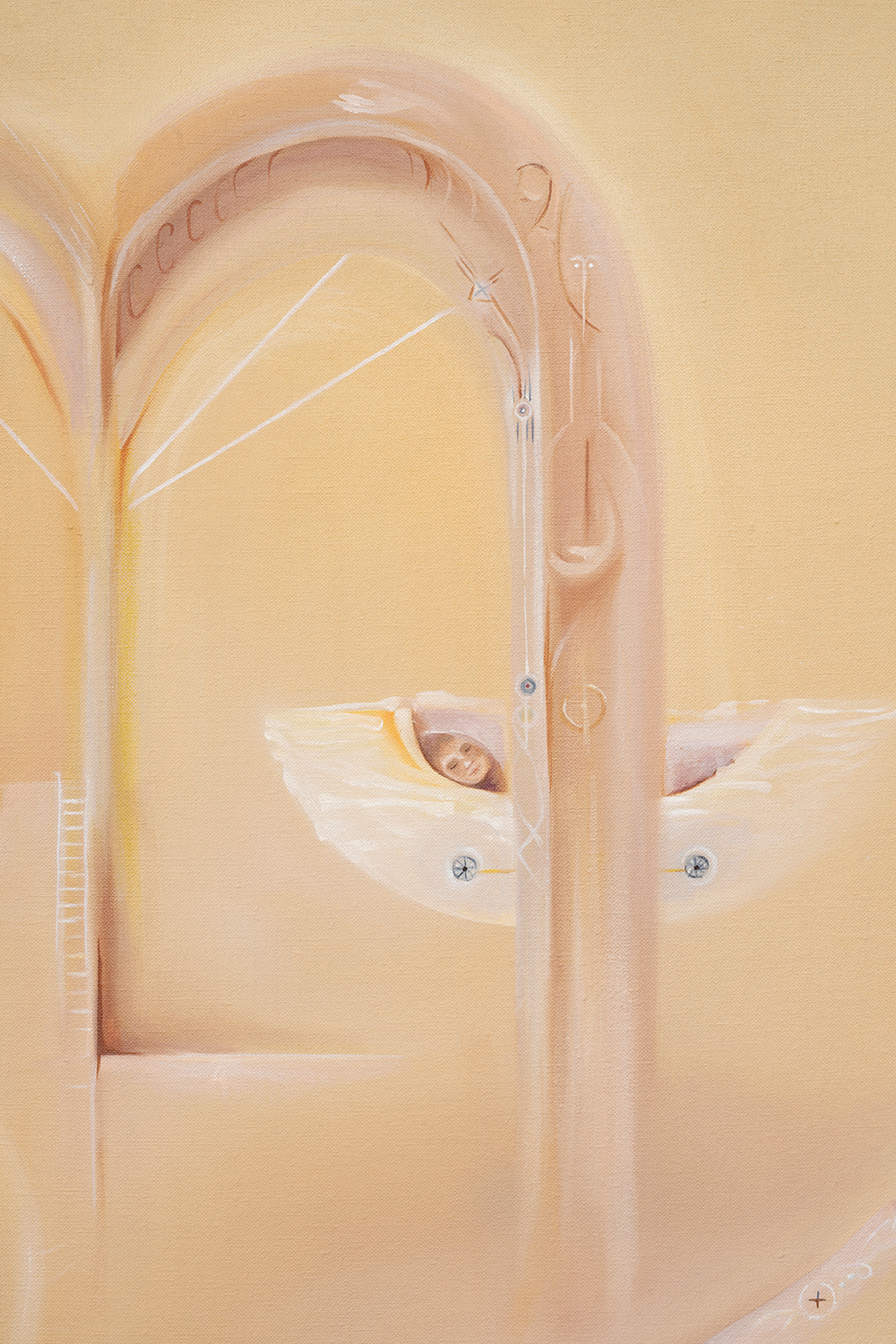
Patricia Fernández Carcedo’s (b. 1980, Burgos, Spain) practice moves between painting, sculpture, and installation to recover and reconstruct a personal archive of materials. Within this framework, Fernández Carcedo situates her paintings alongside collected artifacts and hand-made objects from her inner world, including carved wood, bone, ceramics, letters, bronze pieces, and woodwork created by her late grandfather, José Luis Carcedo. His carvings are recouped and expanded upon by the artist as intricately etched frames for her soft-toned oil paintings. These tableaus of arches, spirals, fragments of the body, and self-referential furniture designs read as symbolic yet cryptic, as if belonging to a private cosmology—part relic, part hallucination.
For her first participation at Art Basel in Basel 2026, Fernández Carcedo presents "Blue-print" (2026) and "to the bottom of the well" (2026), two recent paintings that envision non-linear spaces and timelines. Incised with her late grandfather’s distinctive “x-mark,” the frames extend this pattern across her own carvings as an ever-expanding fractal that, in her words, brings “her antecedent’s mark into the future, continuing the transmission of histories, memories, and ideas that would otherwise remain forgotten.” Other materials hardened against decay— inlaid abalone, ebony, ceramic, and bone—join with walnut and pine to frame and contextualize the regenerative journey depicted in paint.
Reminiscent of a larger surrealist canon and the existential mythologies of artists like Remedios Varo (1908-1963), Fernández Carcedo’s shifting territories chart paths between the external material world and an inner imaginary world that embraces the centrality of care, relation, and change. Many of Fernández Carcedo’s influences explore the concept of an alternative reality, including philosopher Federico Campagna, psychologists Dora Kalf and Carl Jung, and science fiction author Ursula K. Le Guin. These thinkers touch upon ideas of multiverse futures, embracing hybridity and the transient nature of existence as a form of human infinitude. Following suit, Fernández Carcedo’s artwork of speculative worlds is nevertheless anchored in handmade reality, earthside and in present tense.
Fernández Carcedo will present her inaugural solo exhibition in New York with Casey Kaplan in Fall 2027.
![]()
![]()
![]()
Patricia Fernández Carcedo
to the bottom of the well, 2026
Oil on linen, hand-carved walnut, hand-carved pine by José Luis Carcedo, ebony, alder, ceramic
24.5 x 34.5 x 1.5” / 62.9 x 87.7 x 3.5cm
![]()
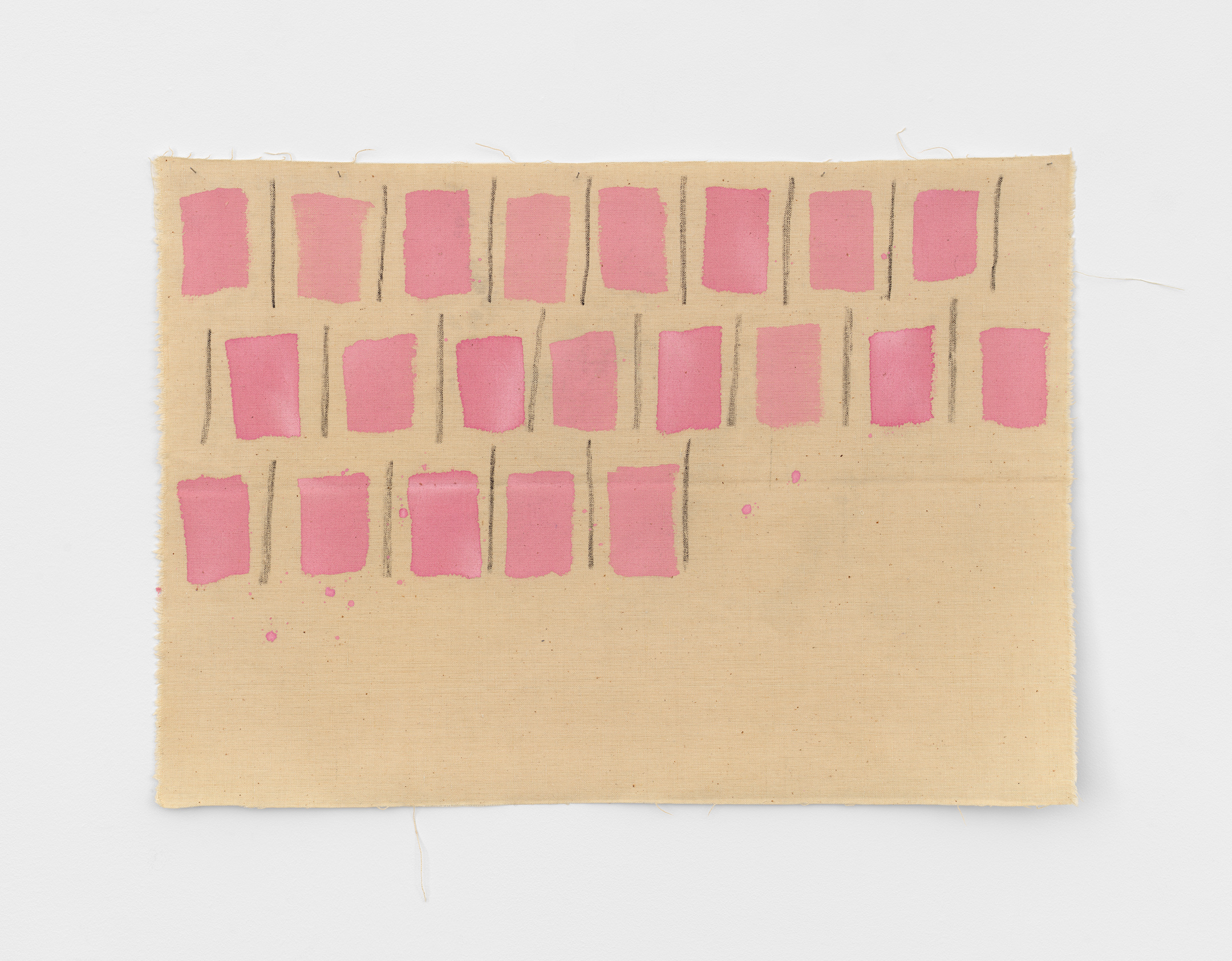
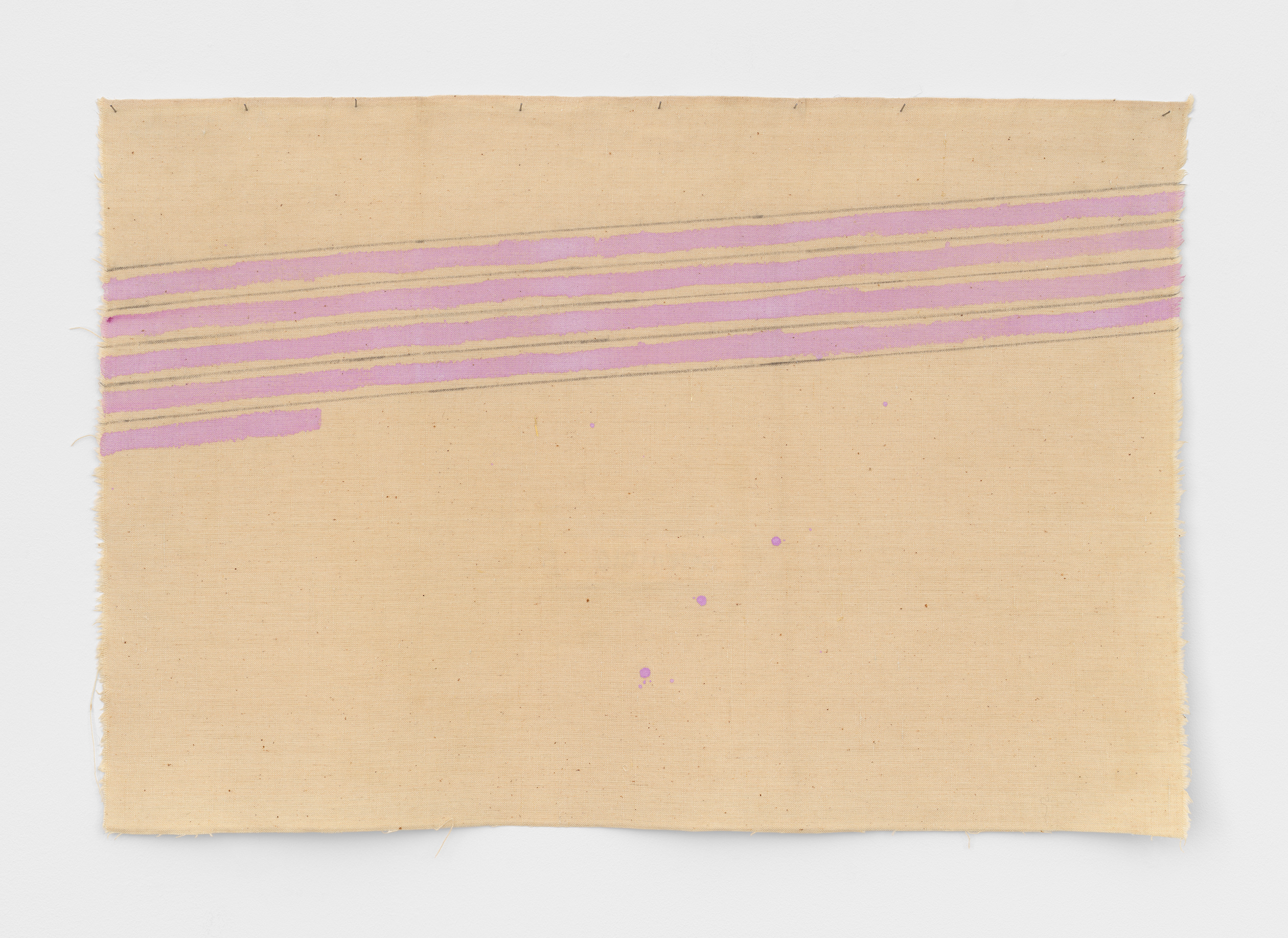
Giorgio Griffa
Segni verticali, 1970
Acrylic and pastel on canvas
15.9 x 22.4” / 40.5 x 57cm
![]()
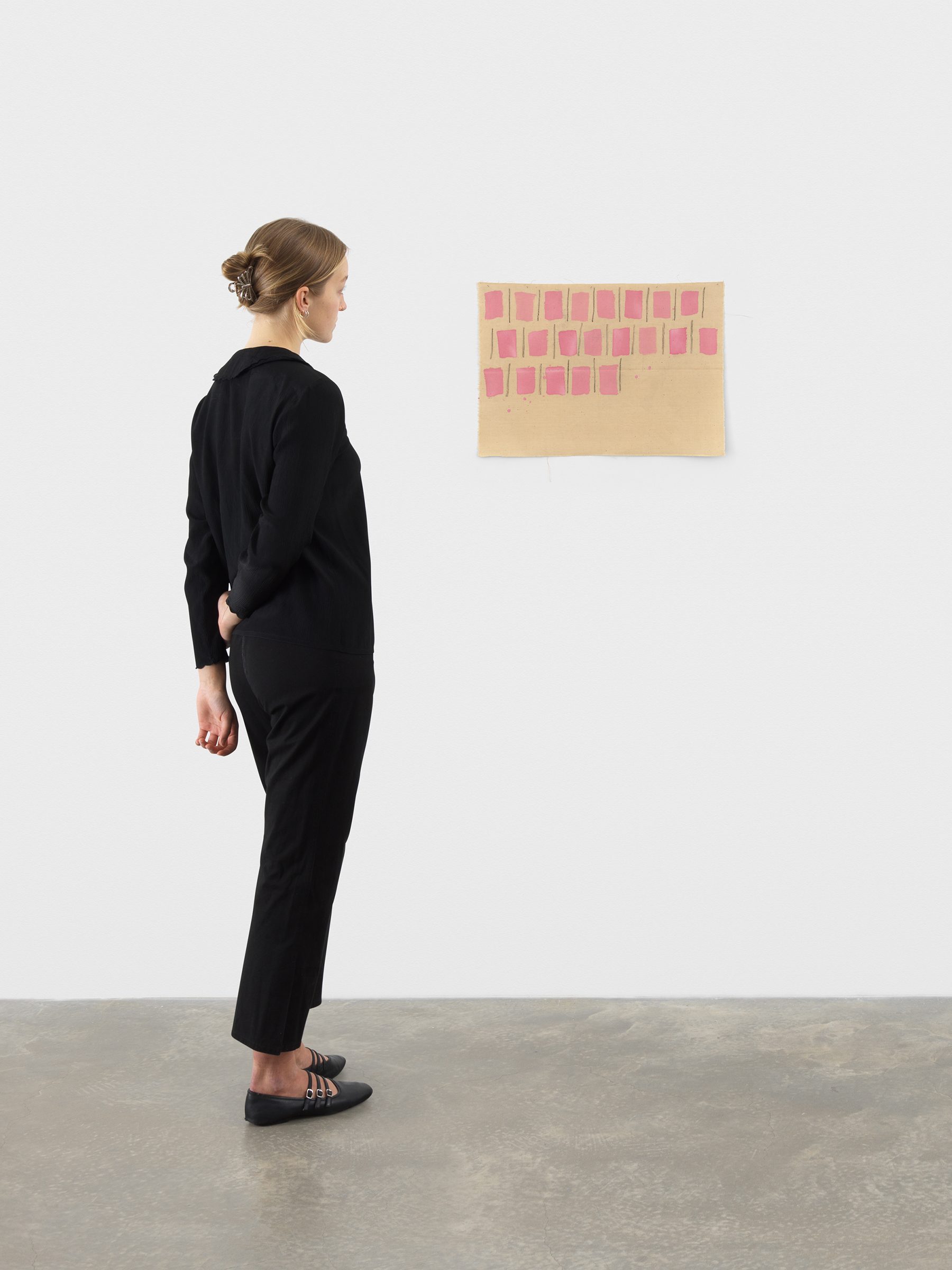
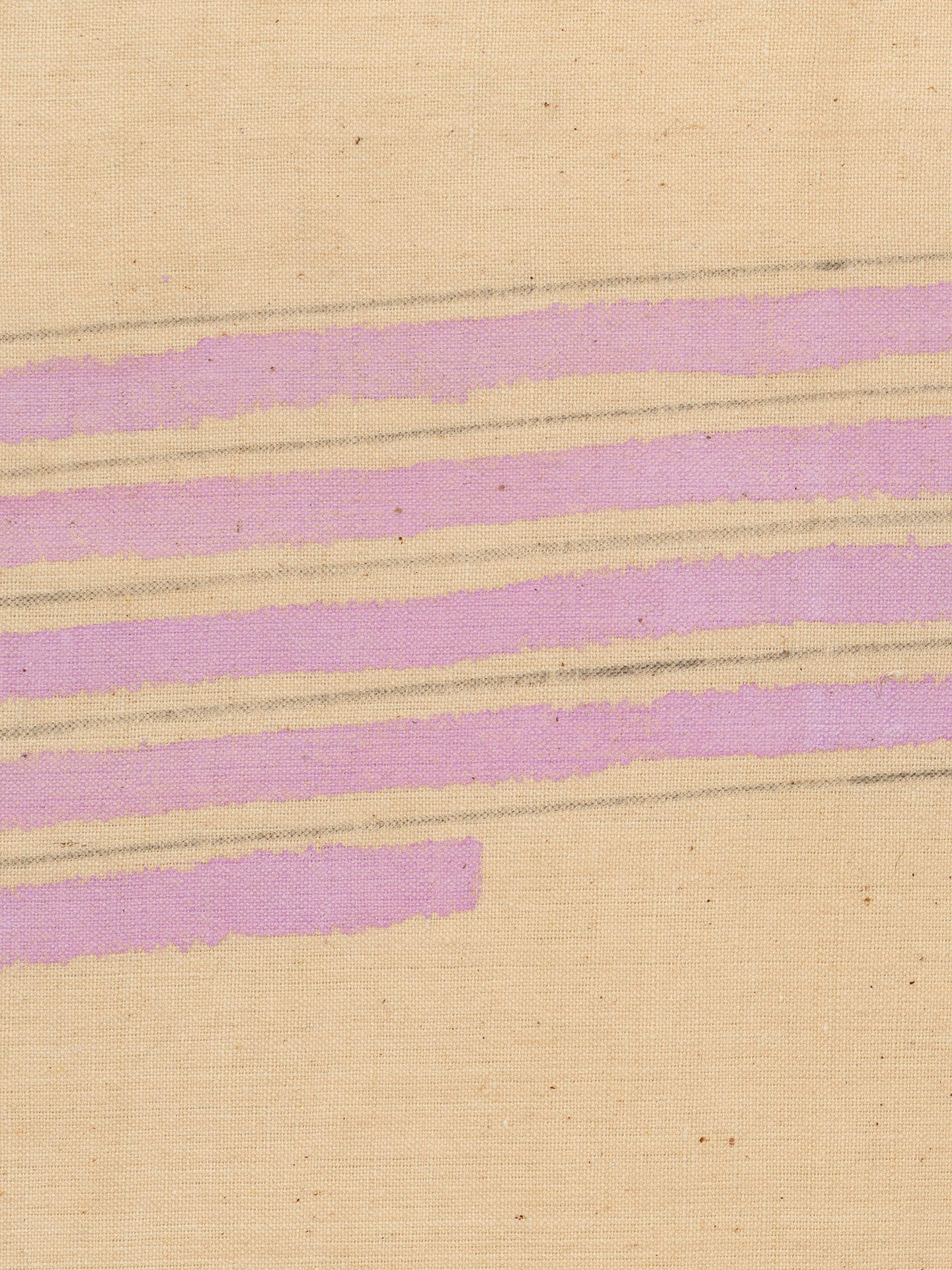
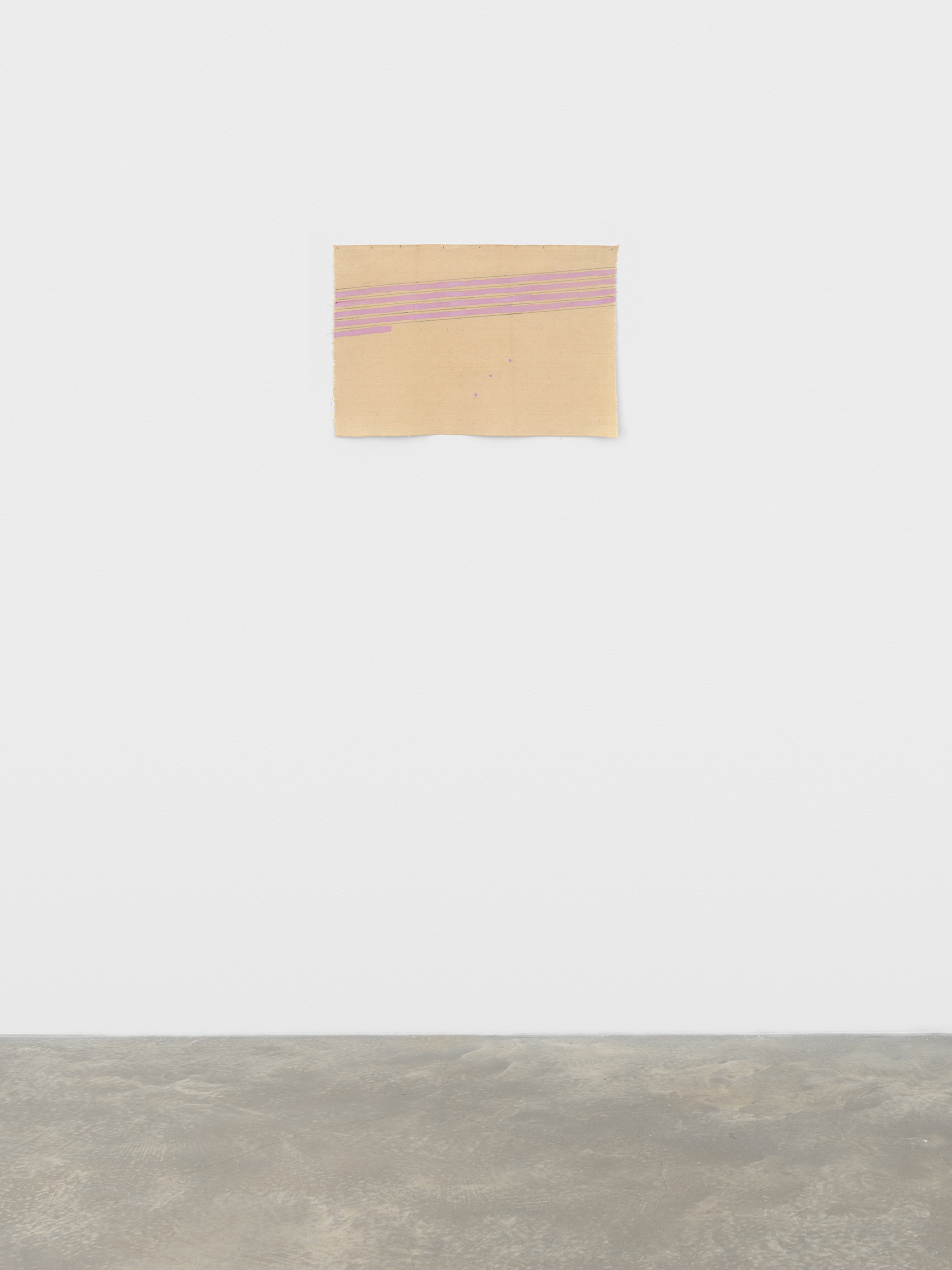
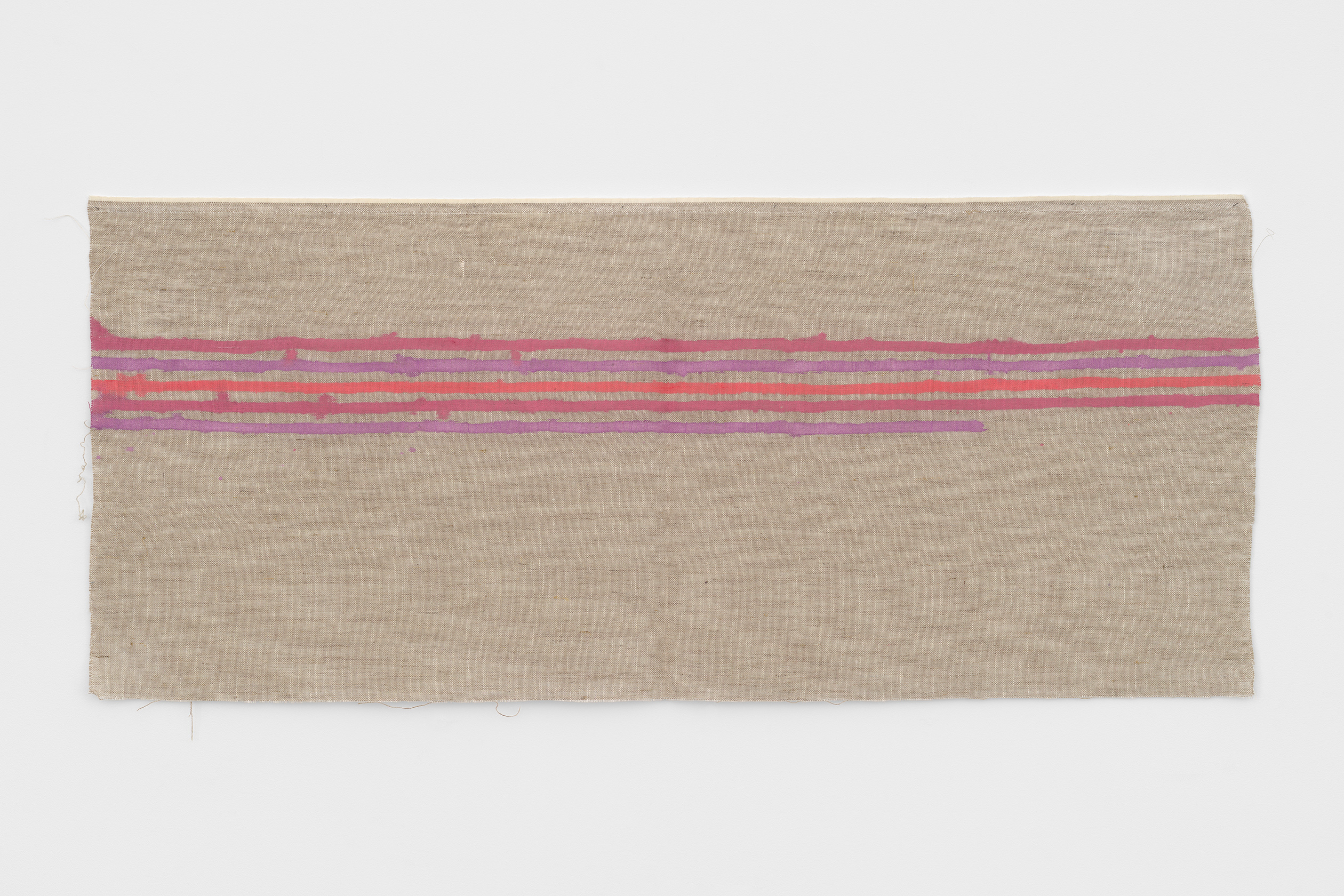
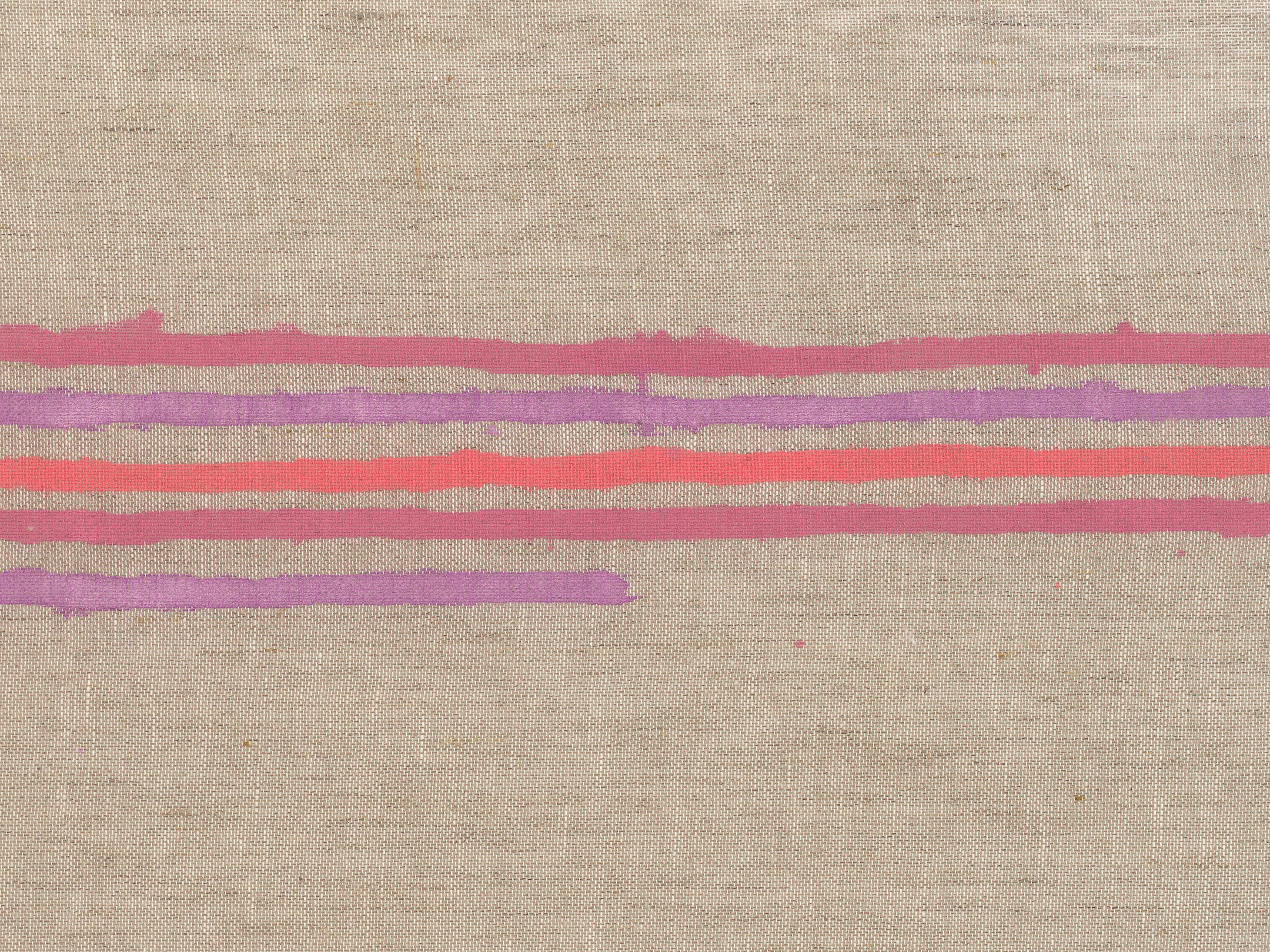
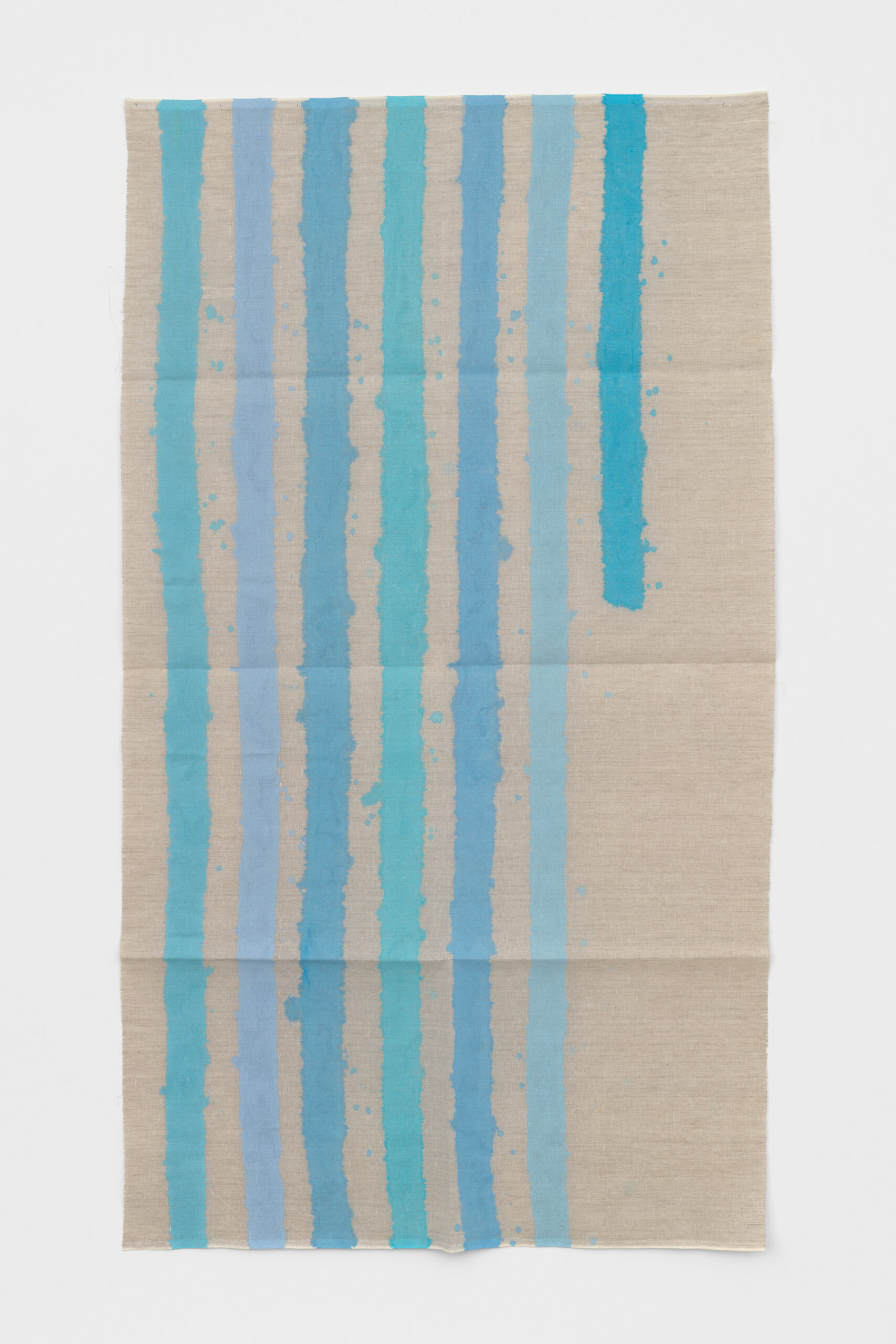
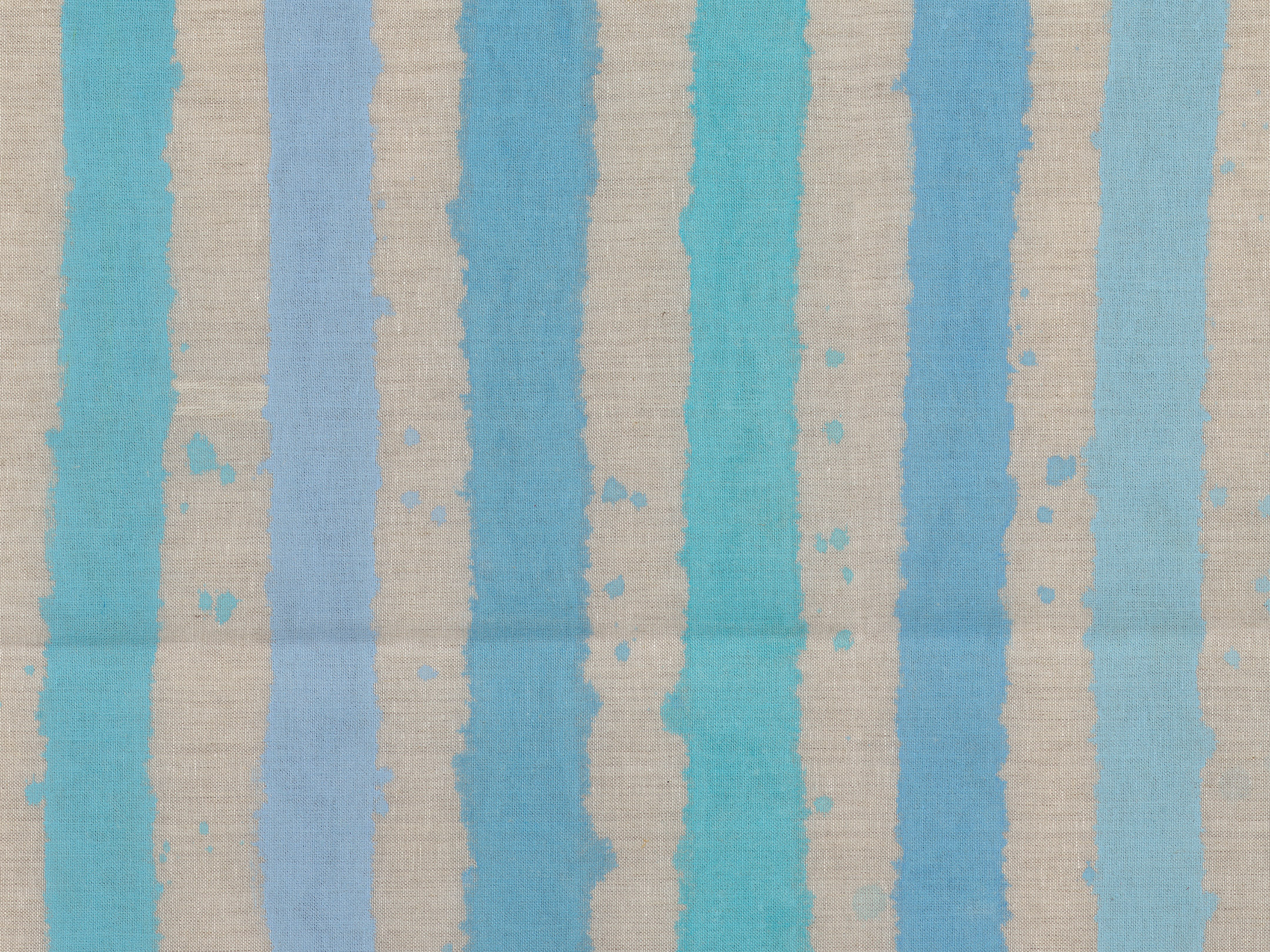
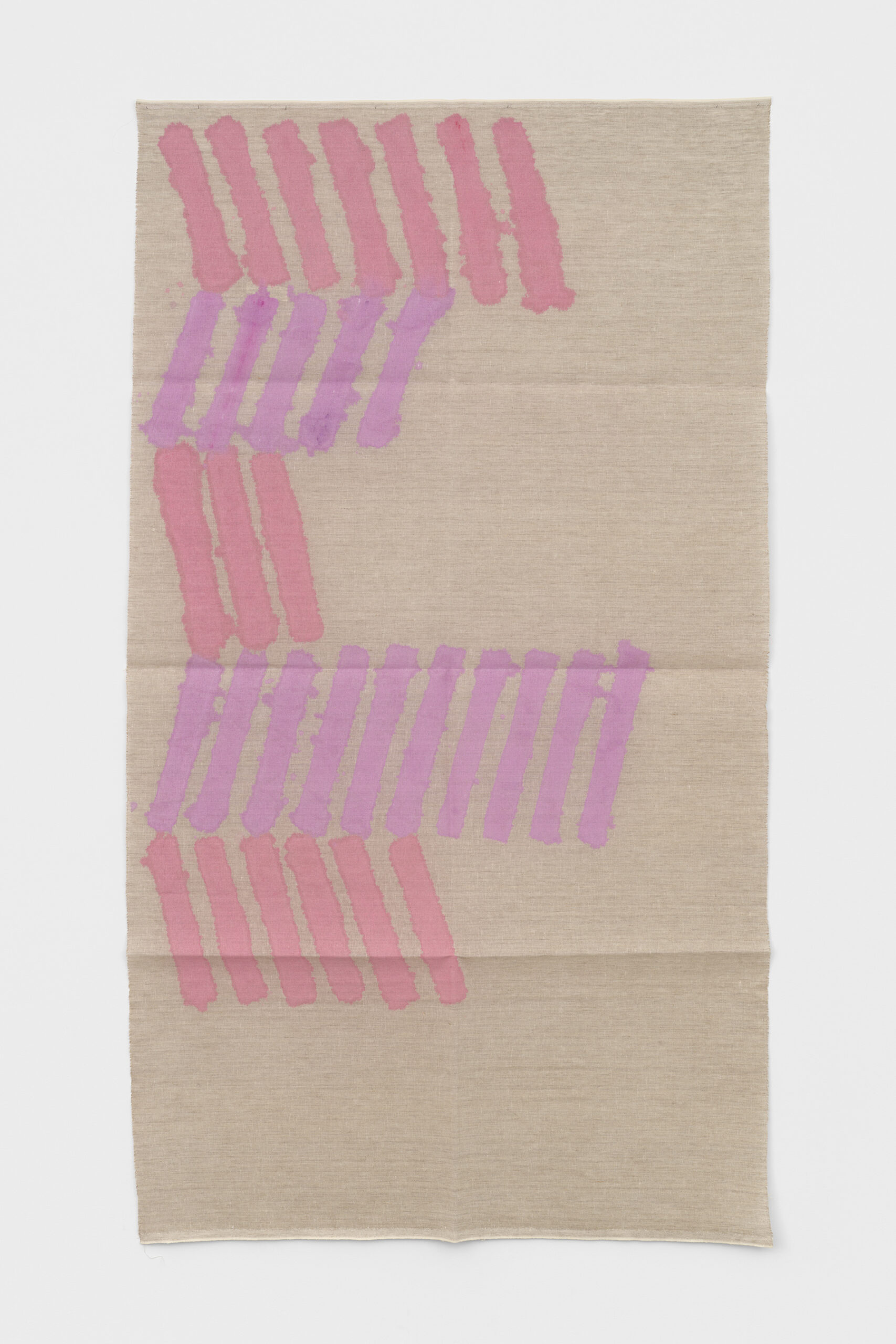
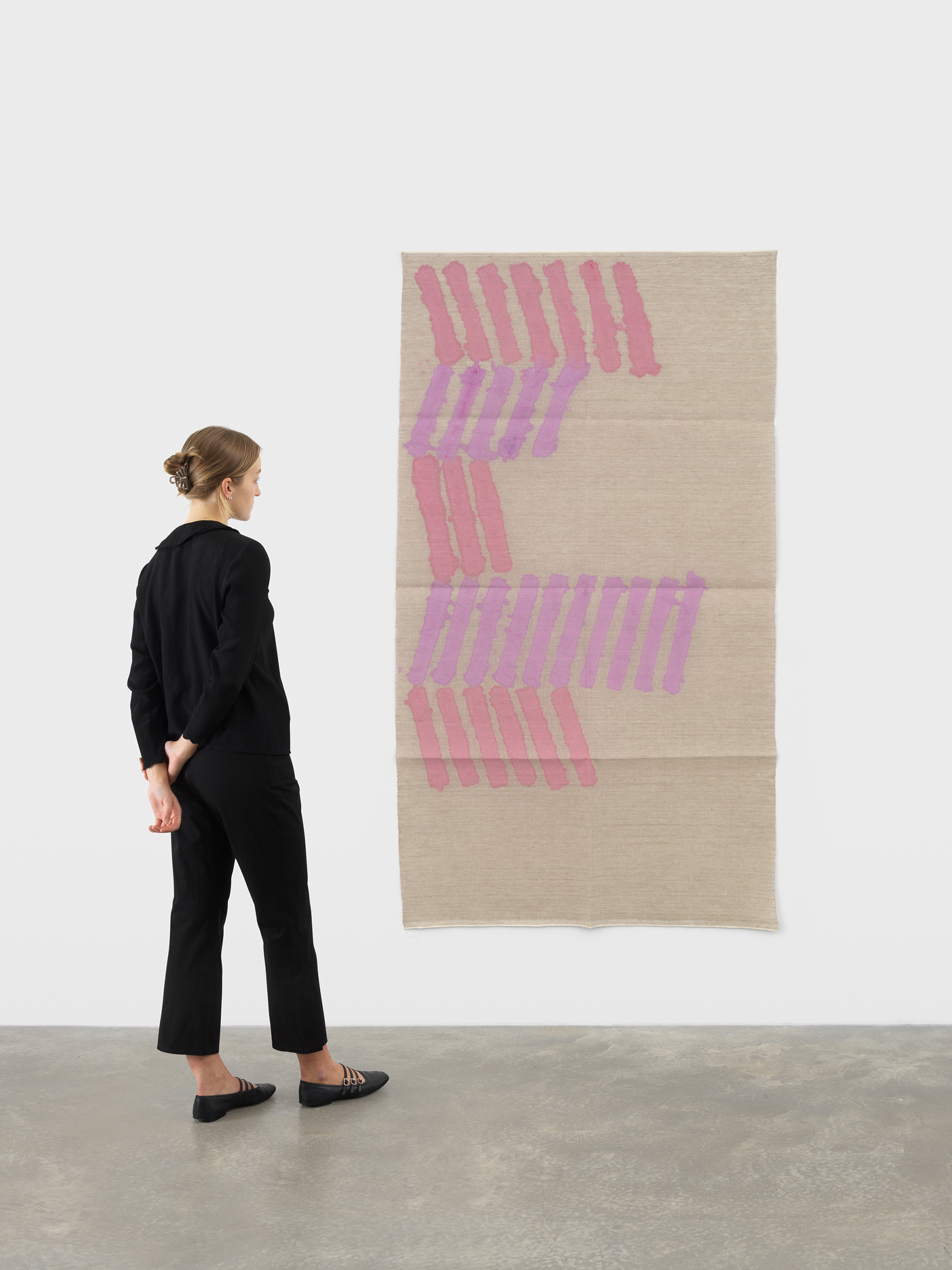
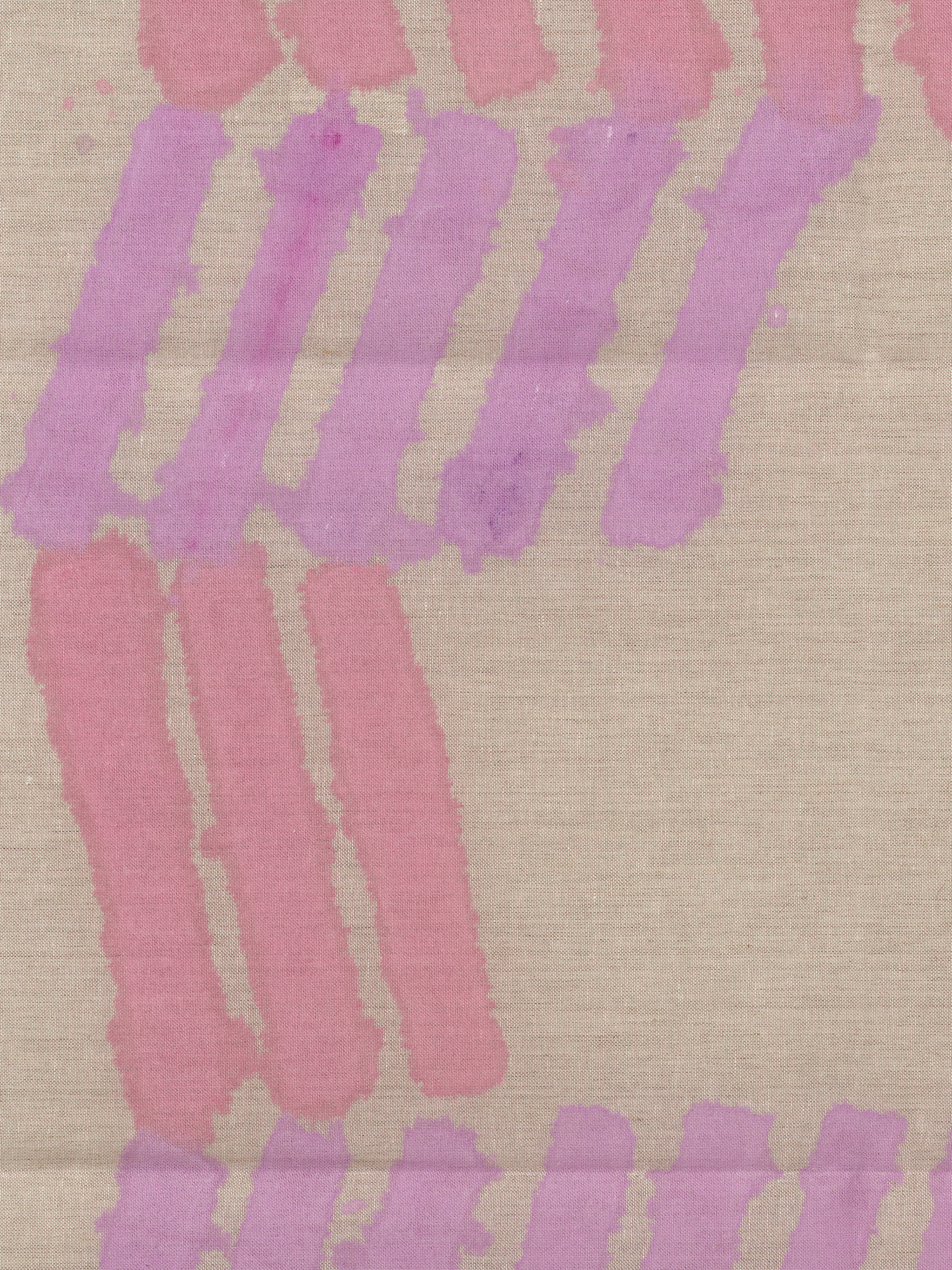
For Art Basel in Basel 2026, Giorgio Griffa presents five paintings from his Primary Signs cycle, a pivotal body of work from the late 1960s and 1970s that launched a number of foundational elements in the artist’s practice – unstretched canvases, ordered patterns of horizontal, vertical, and oblique marks, and compositions he described as “constant and never finished.”1 This cycle explores the possibilities of an anonymous sign, where the privileged hand of the artist is removed by the logic of the painting’s task-like marks. Crouching close to the canvas laid flat on his studio floor, Griffa works in thin washes of water-based acrylic paint, pressing and lifting his loaded brush across an unprimed expanse. In Verticale (1976) and Due segni (1978), thick stripes of blue and pink advance down the canvas before suddenly pausing, as if resisting an end to the painting’s own creation. Two intimately scaled works, Linee orizzontali (1973) and Quasi orizzontale (1971), are likewise halted mid-way across the composition, their thin lines of acrylic color underscored with black indian ink. These dark marks also appear in Segni verticali (1971), an early example of the artist using a small rectangular sponge to apply diluted paint. As his implements move across each canvas, drips seep into the fibers – a candid record of a natural, unedited process. In this private encounter between materials, Griffa elides the space between maker and made: “I don’t portray anything, I paint.”2
For nearly sixty years, Giorgio Griffa (b. 1936, Turin, Italy) has developed a painting practice that records “the memory of material,” allowing brush, paint, and canvas to dictate the outcome of his work. The rawness of the resulting color fields, along with large areas of unpainted canvas, grants Griffa’s paintings a provisional feel, emphasizing his convictions about the independent life of materials. The paintings are then displayed unframed, pinned to the wall with small nails along their top edge, and when not exhibited, are folded and stacked, creating an underlying framework for his compositions. Griffa approaches painting like a meditation of sorts—reducing his markings to a repetitive sequence of lines, gestures, and symbols dictated by the materials themselves and revealing nothing other than an action recording time within space.
On June 13, 2026, the Clark Art Institute in Williamstown, MA, will present Paths in the Forest, the first solo museum exhibition of Giorgio Griffa in the United States.
1, 2 Giorgio Griffa, 1973.
![]()
Giorgio Griffa
Quasi orizzontale, 1971
Acrylic and pastel on canvas
15.7 x 23.2" / 40 x 59cm
![]()
Giorgio Griffa
Linee orizzontali, 1973
Acrylic on canvas
19.7 x 45.7” / 50 x 116cm
![]()
Giorgio Griffa
Verticale, 1976
Acrylic on canvas
81.1 x 46.1" / 206 x 117cm
![]()
Giorgio Griffa
Due segni, 1978
Acrylic on canvas
81.1 x 45.7" / 206 x 116cm
![]()
Caroline Kent
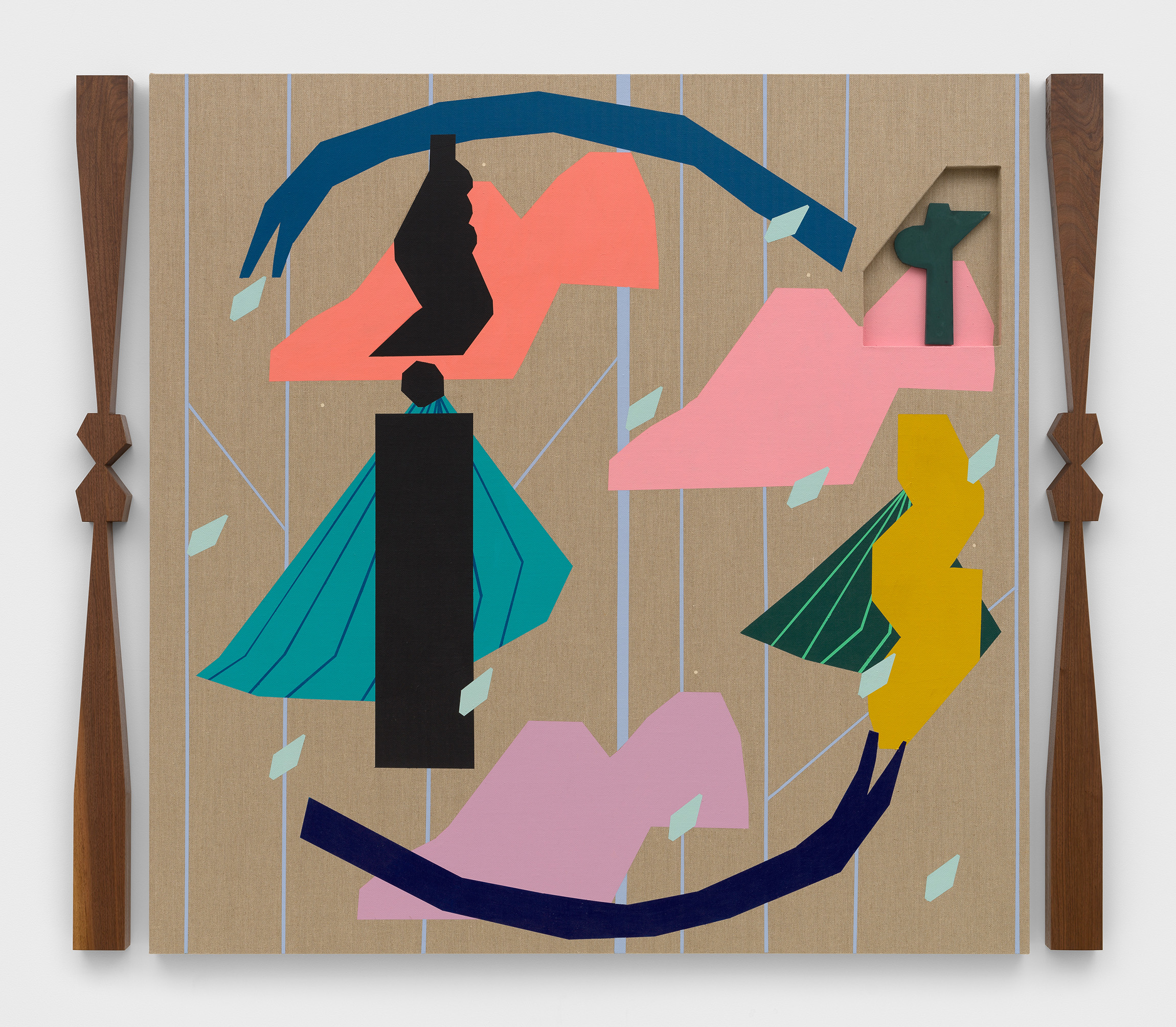
A bounty that leaps from within, 2026
Acrylic on Belgian linen, pigmented cement, walnut
63 x 74 x 2" / 160 x 188 x 5.1cm
![]()
Caroline Kent (b. 1975, Sterling, IL) engages in a language of abstraction through an instinctive approach to color and form. Her practice encourages a mutual exchange between maker and viewer by way of invented modes of communication. Through painting, drawing, sculpture, text, and performance, Kent stretches the limitations of language to create a meaningful space for both silence and sound, shape, and empty ground.
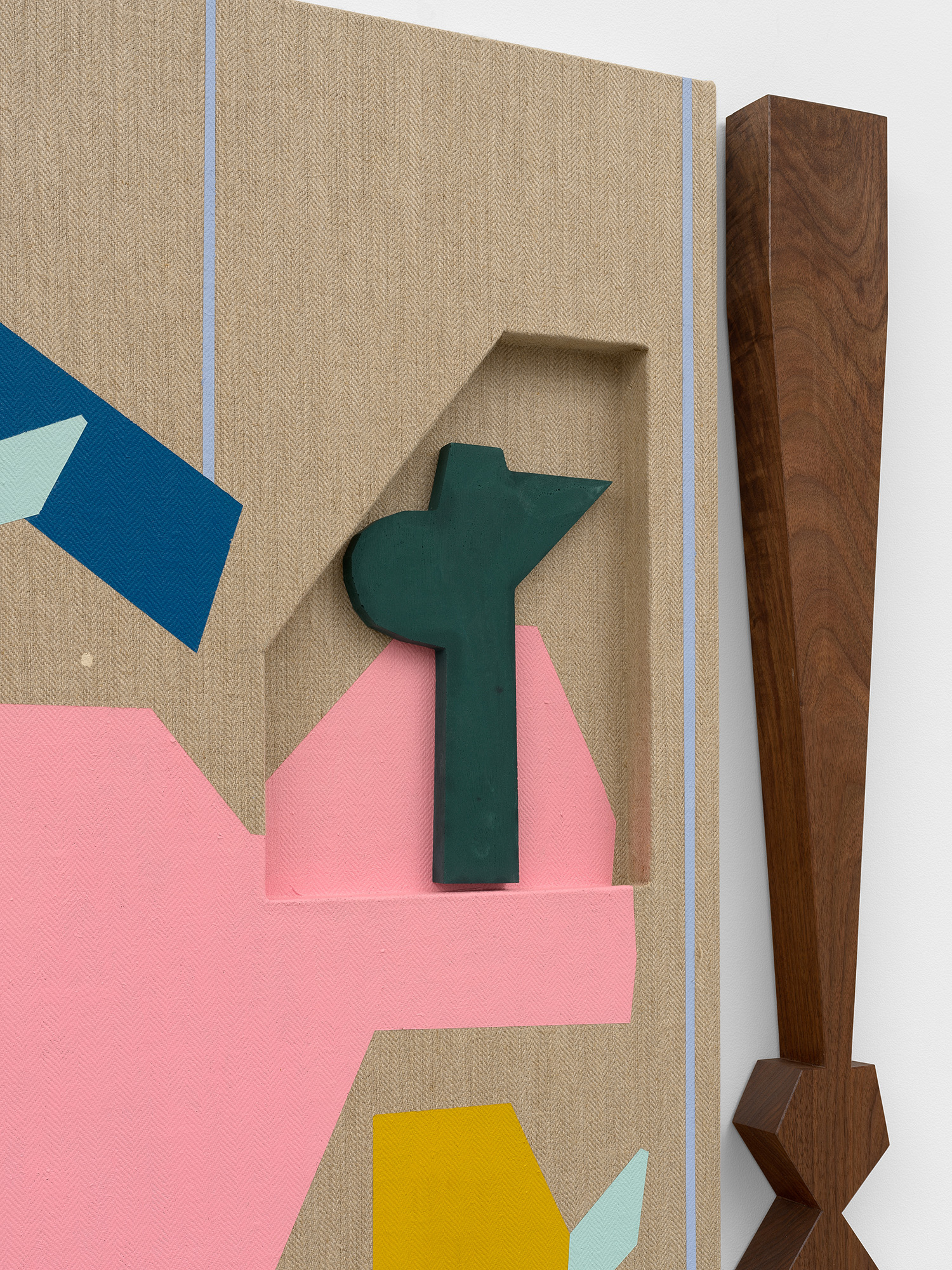
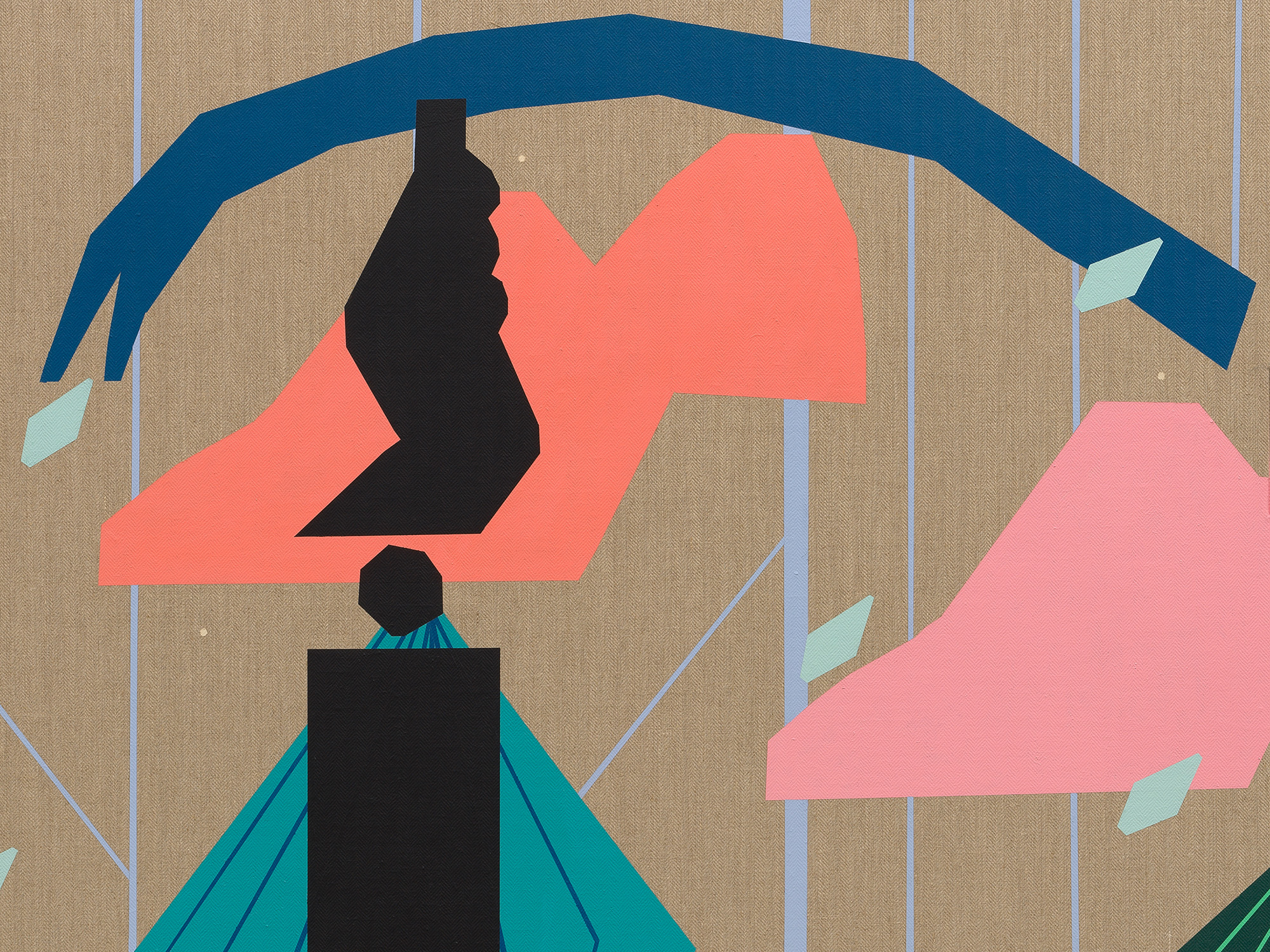
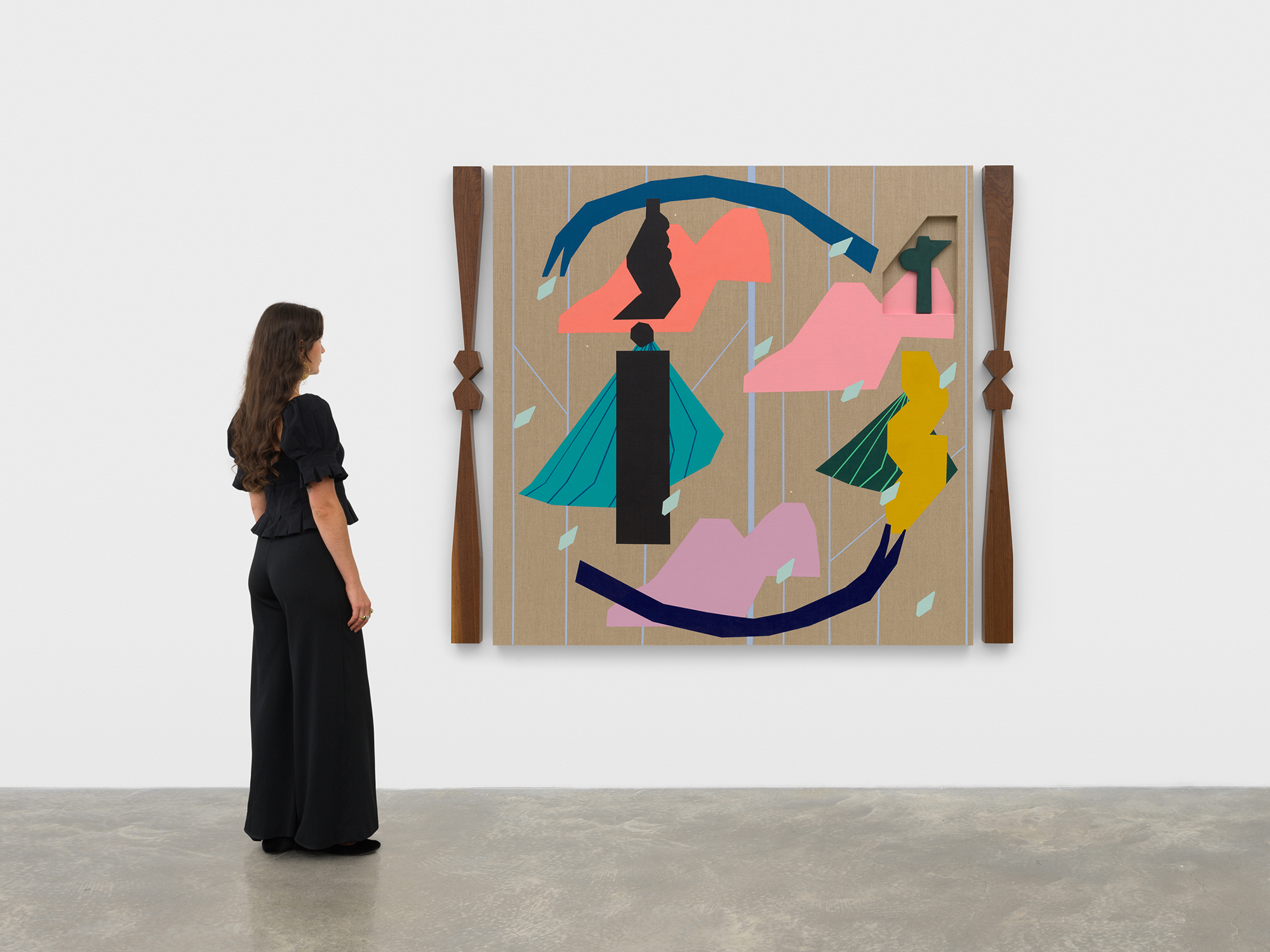
For Art Basel in Basel 2026, Kent presents A bounty that leaps from within (2026), a brightly colored composition that pulses against the soft herringbone weave of its Belgian linen ground. The painting is flanked by two walnut elements that function like totems or columns, echoing the pale blue vertical lines that establish the rhythm of the geometric forms layered across the surface. Herringbone cloth, porous dyed cement, slick acrylic, and smooth walnut enter a languid dialogue, as though speaking a shared language in distinct dialects. Each material absorbs and reflects the presence of the others: geometric lines yield to the wood’s natural grain, while polished edges meet softened fibers.
Kent’s compositions draw from American black-and-white cinema of the 1950s and ’60s. When paused, a film frame resolves into a carefully structured field of tonal relationships, where gradients of gray spread evenly across the picture plane. Intimate domestic details—a lamp on an end table, patterned curtains, a dress, or a hat resting on a mantel—occupy the same flattened register of light and shadow, connected through gradation rather than depth. Echoes of these interiors recur throughout Kent’s titles and compositions, suggesting scenes that feel both familiar and perpetually out of reach.
In translating this cinematic logic into paint, spatial illusion collapses into a two-dimensional surface and forms flatten into color. At times, however, the movement reverses: space opens inward, receding into a carved niche within the canvas. This sculptural device, first introduced through Kent’s interventions on gallery walls and later in wooden constructions, now enters the painting itself to create literal depth. An enigmatic motif—first developed in cut paper and later in paint—is cast in pigmented cement and set into the recess. Both embedded and elevated, it carries a quiet significance in high relief, like a treasured relic.
![]()
![]()
![]()
Caroline Kent
Temporal flowers, Eternal musings, 2026
Acrylic on Belgian linen
29 x 24" / 73.7 x 61cm
Framed: 30.5 x 25.25 x 2.75" / 77.5 x 64.1 x 7cm
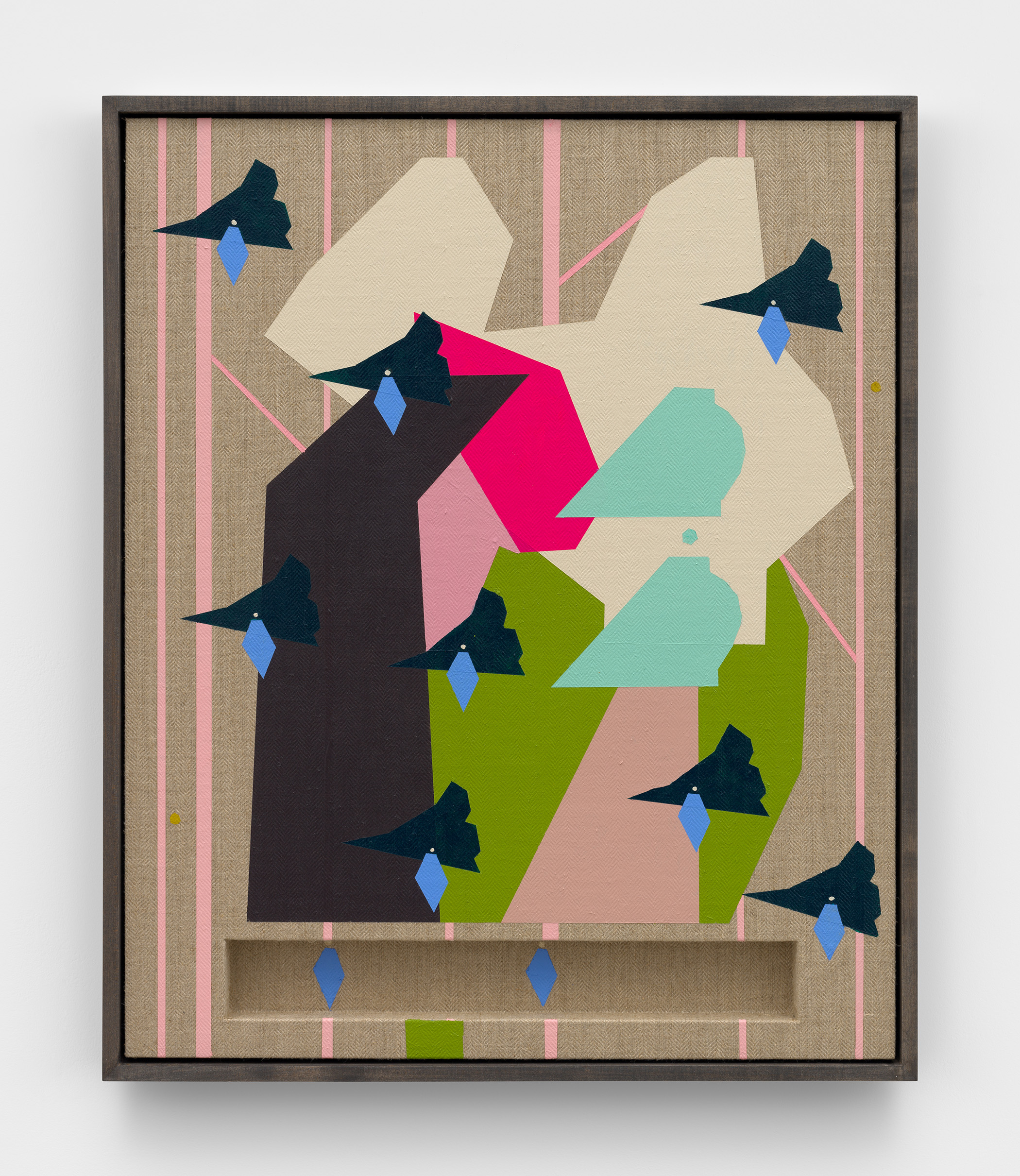
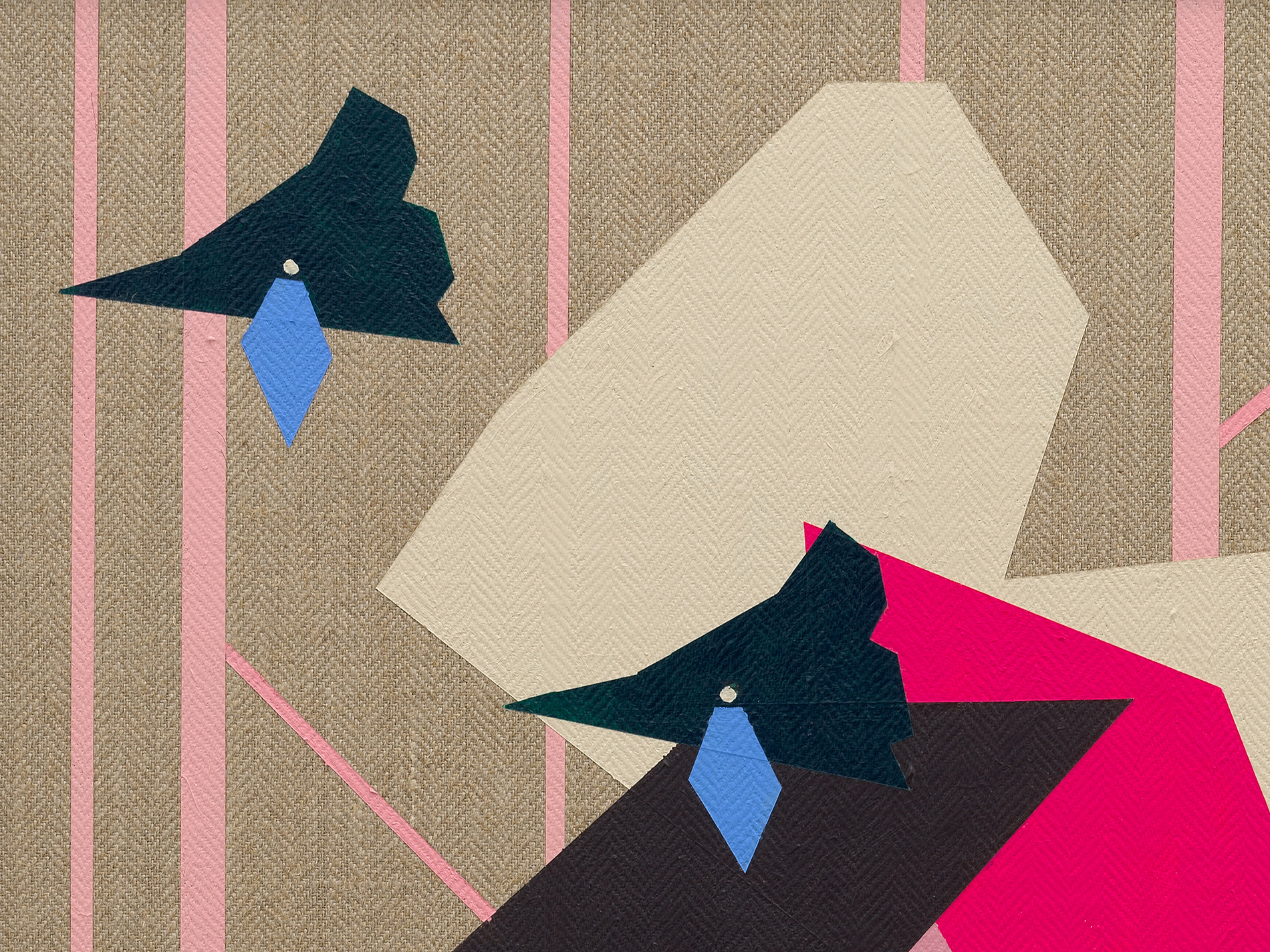
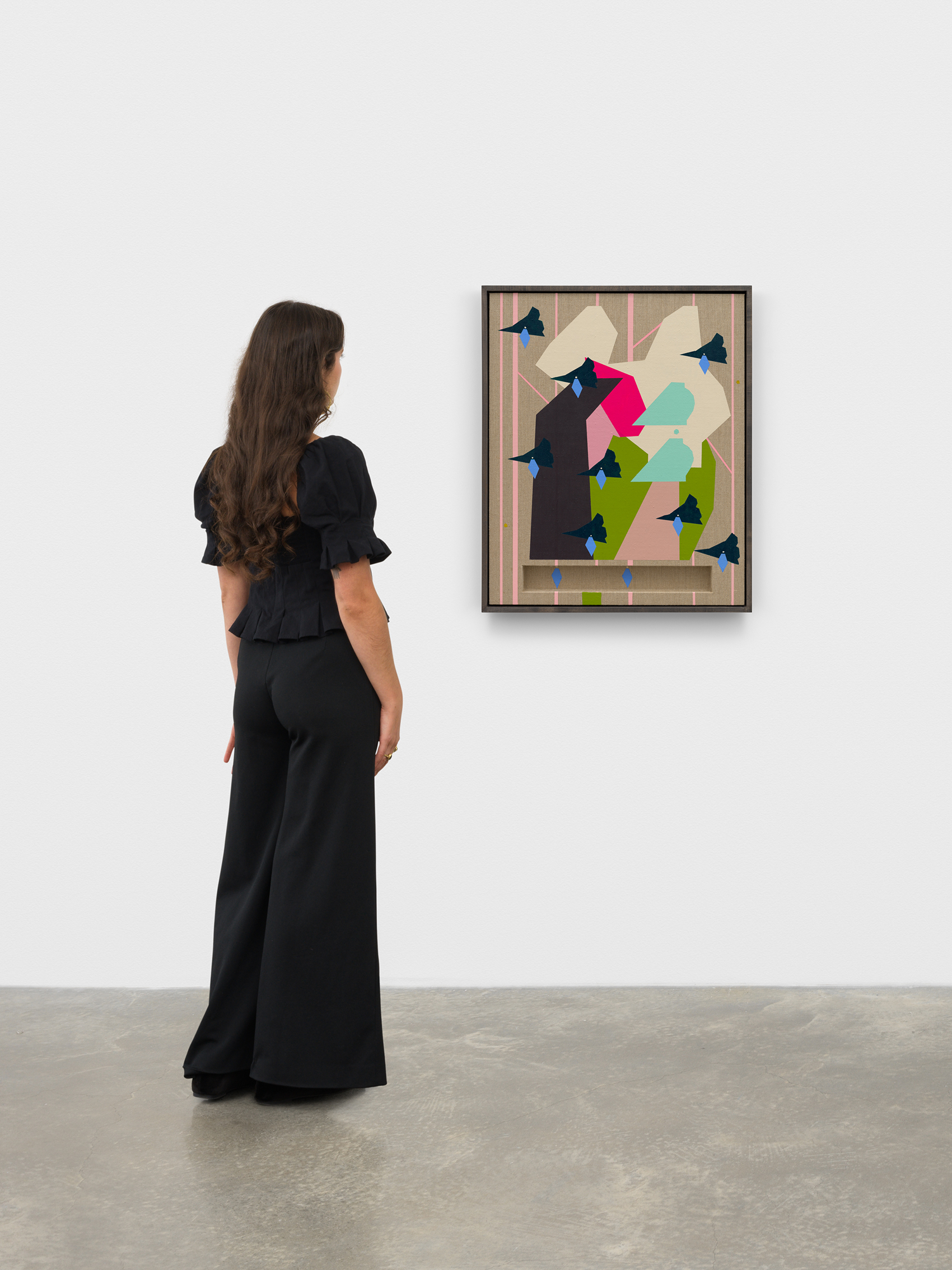
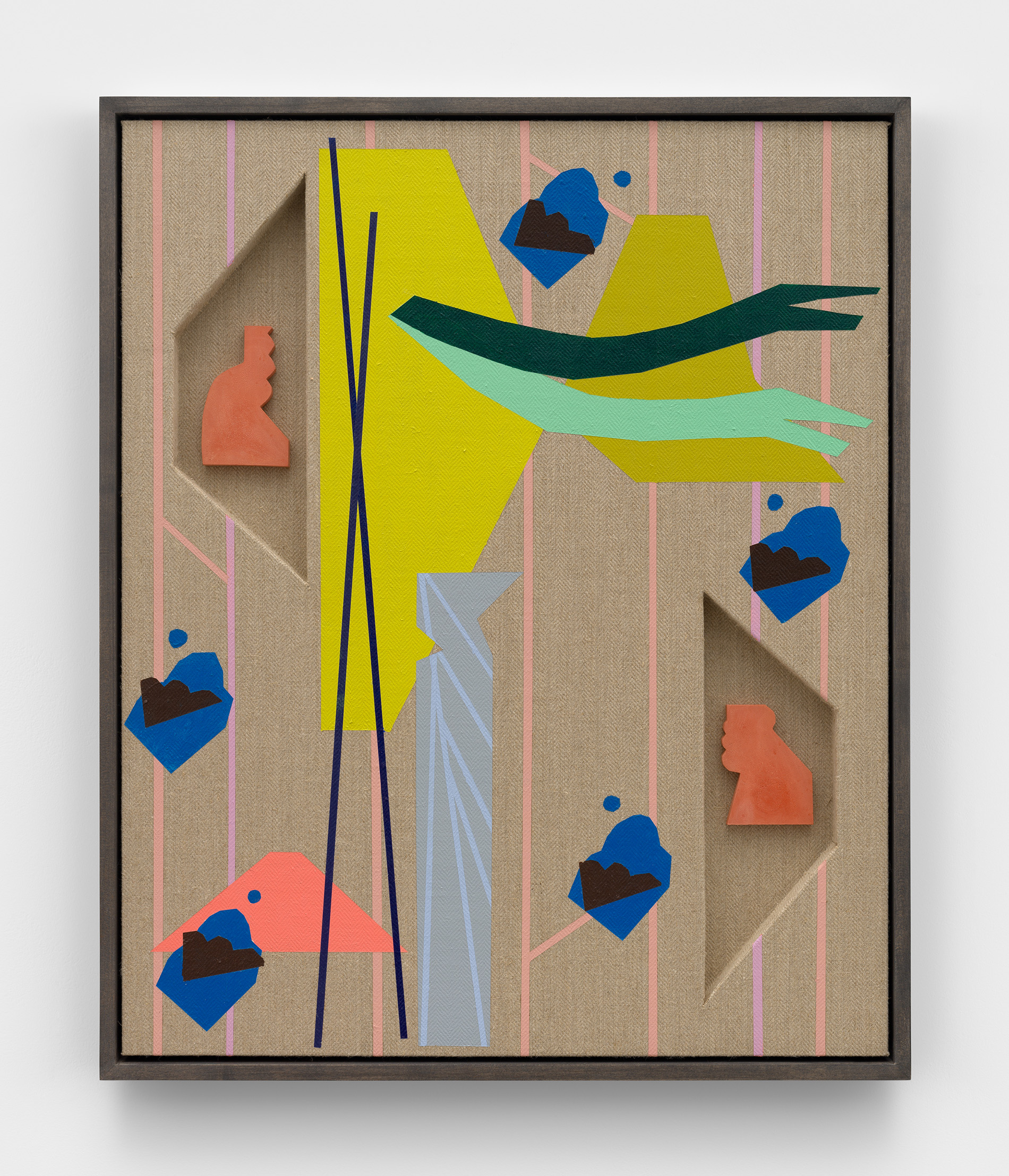
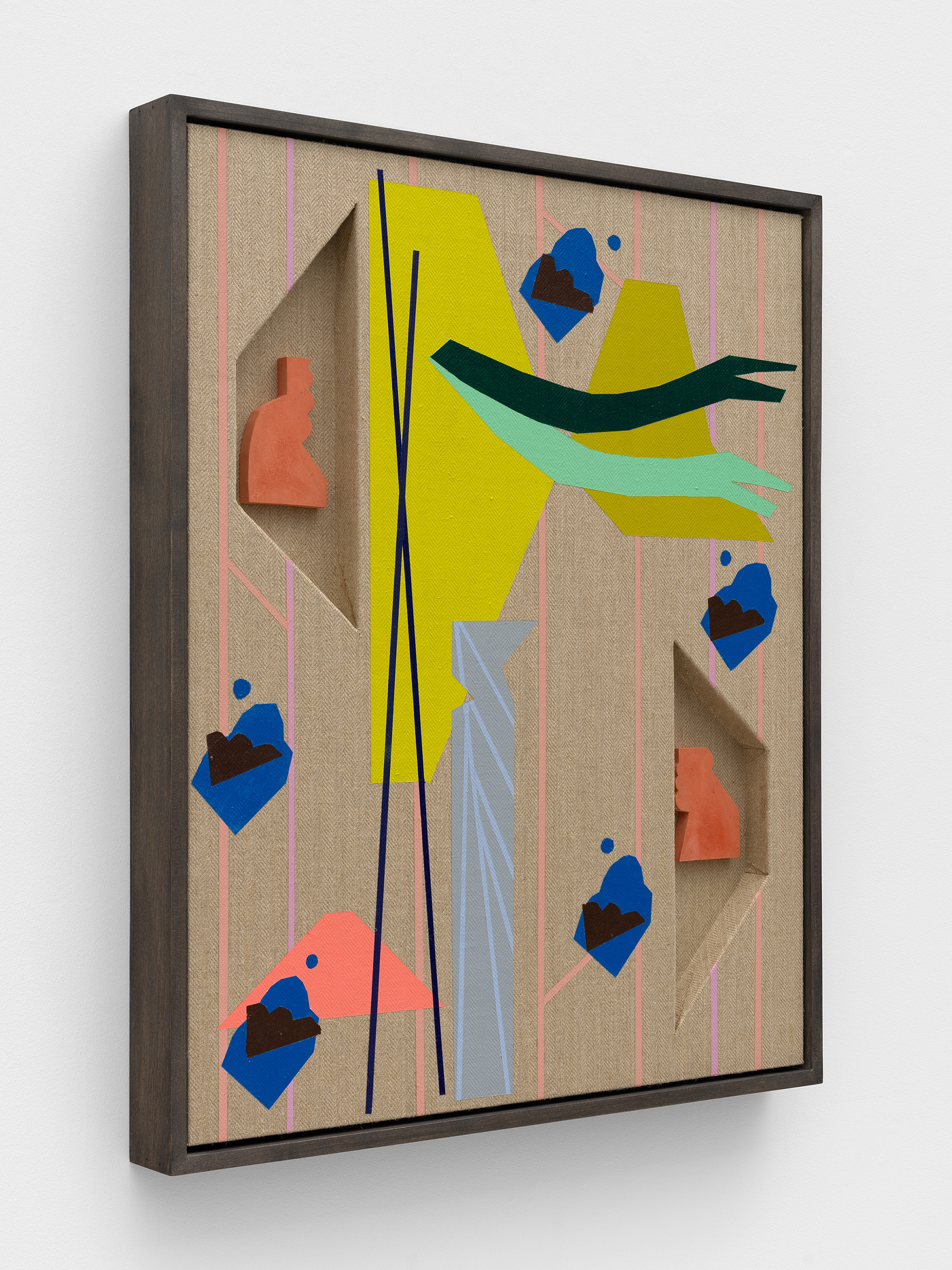
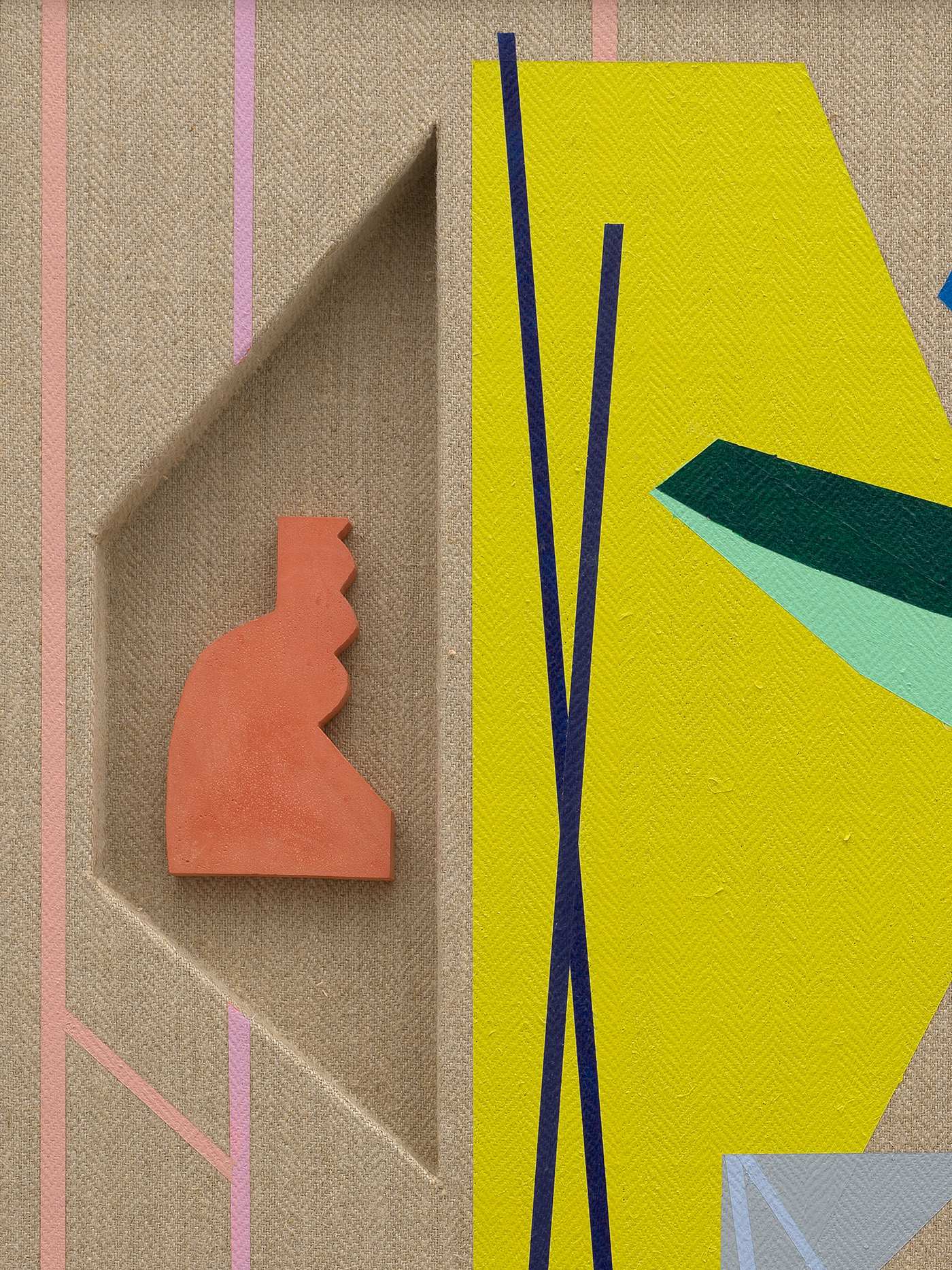
Temporal flowers, Eternal musings and Companions along the way (2026) condenses Kent’s visual language into a frame that hovers between sweeping scene and intimate snapshot. The artist’s play with repetition—recall without exactitude—welcomes deviation as forms move across the picture plane and through its depth, like patterned wallpaper brushing past dormant sockets and traces of past inhabitants. Two mirrored recesses on either side of the work punctuate the surface and draws the viewer inward, beyond the paintings’ façade. An enigmatic motif—first developed in cut paper and later in paint—is cast in pigmented cement and set into each recess. Both embedded and elevated, it carries a quiet significance in high relief, like a treasured relic.
![]()
Caroline Kent
Companions along the way, 2026
Acrylic on Belgian linen, pigmented cement
29 x 24" / 73.7 x 61cm
Framed: 30.5 x 25.25 x 2.75" / 77.5 x 64.1 x 7cm
![]()
Caroline Kent
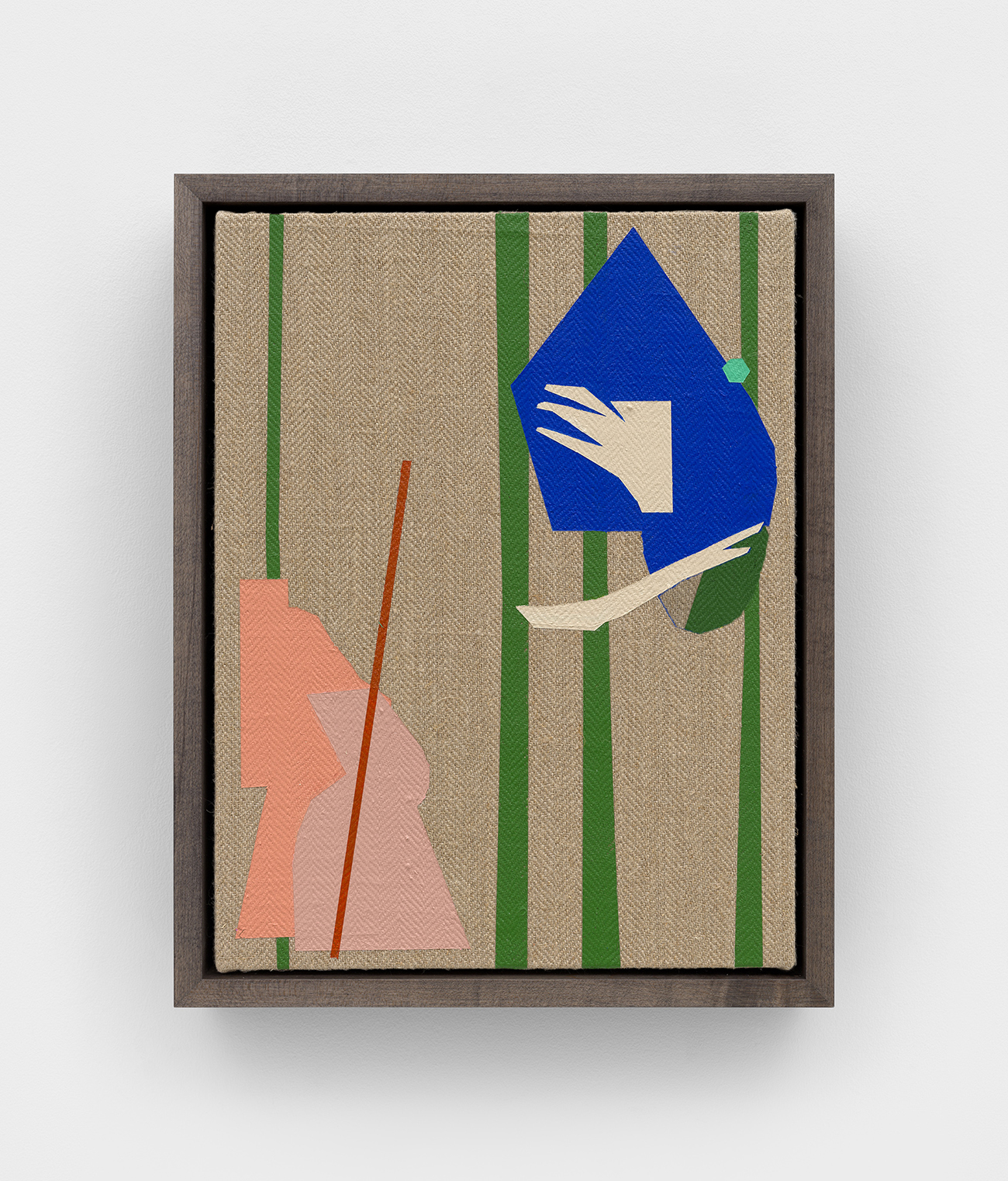
A cautionary word/ an open path, 2026
Acrylic on Belgian linen
13 x 10" / 33 x 25.4cm
Framed: 14.5 x 11.5 x 2.75" / 36.83 x 69.34 x 6.98cm
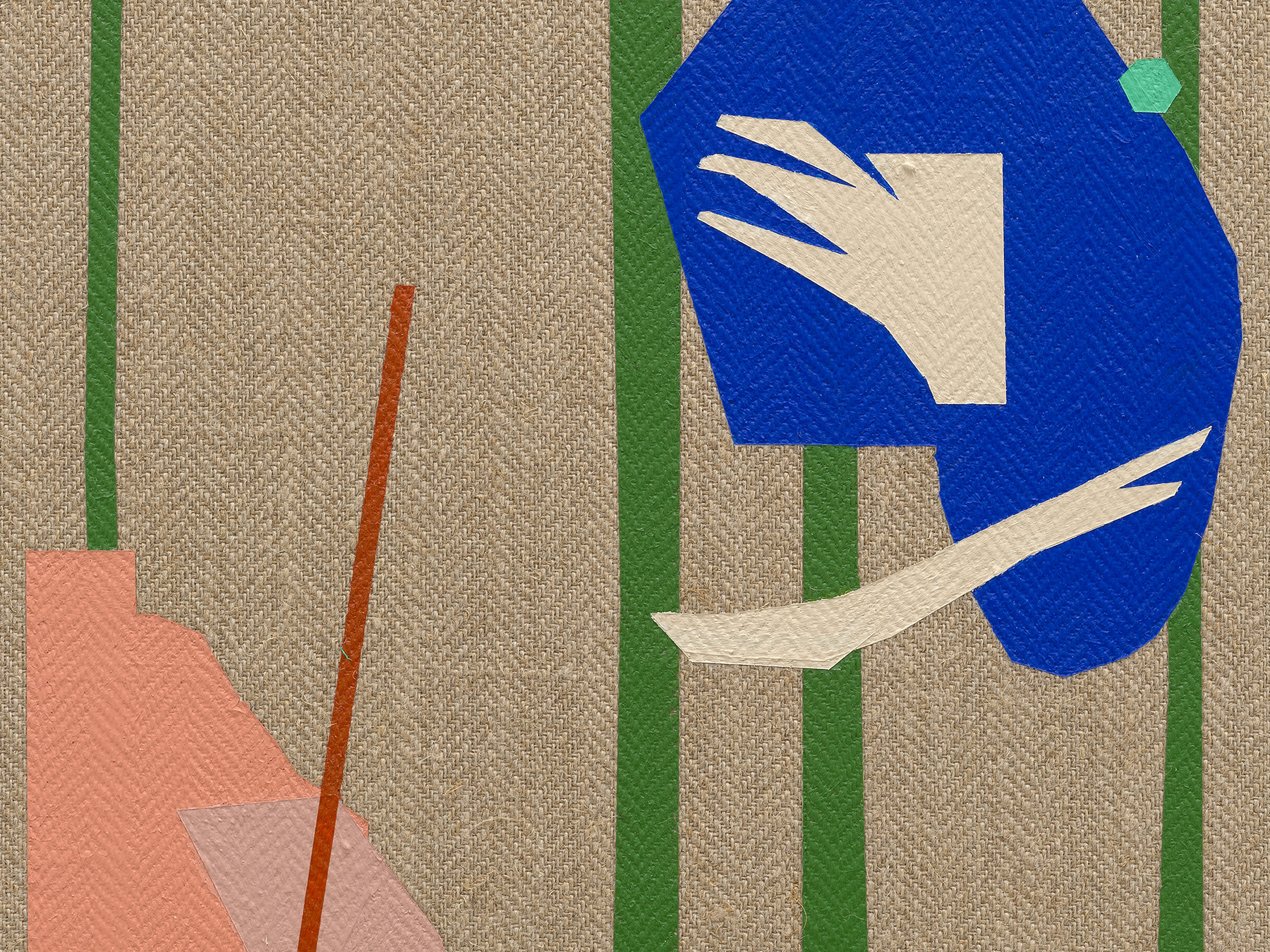
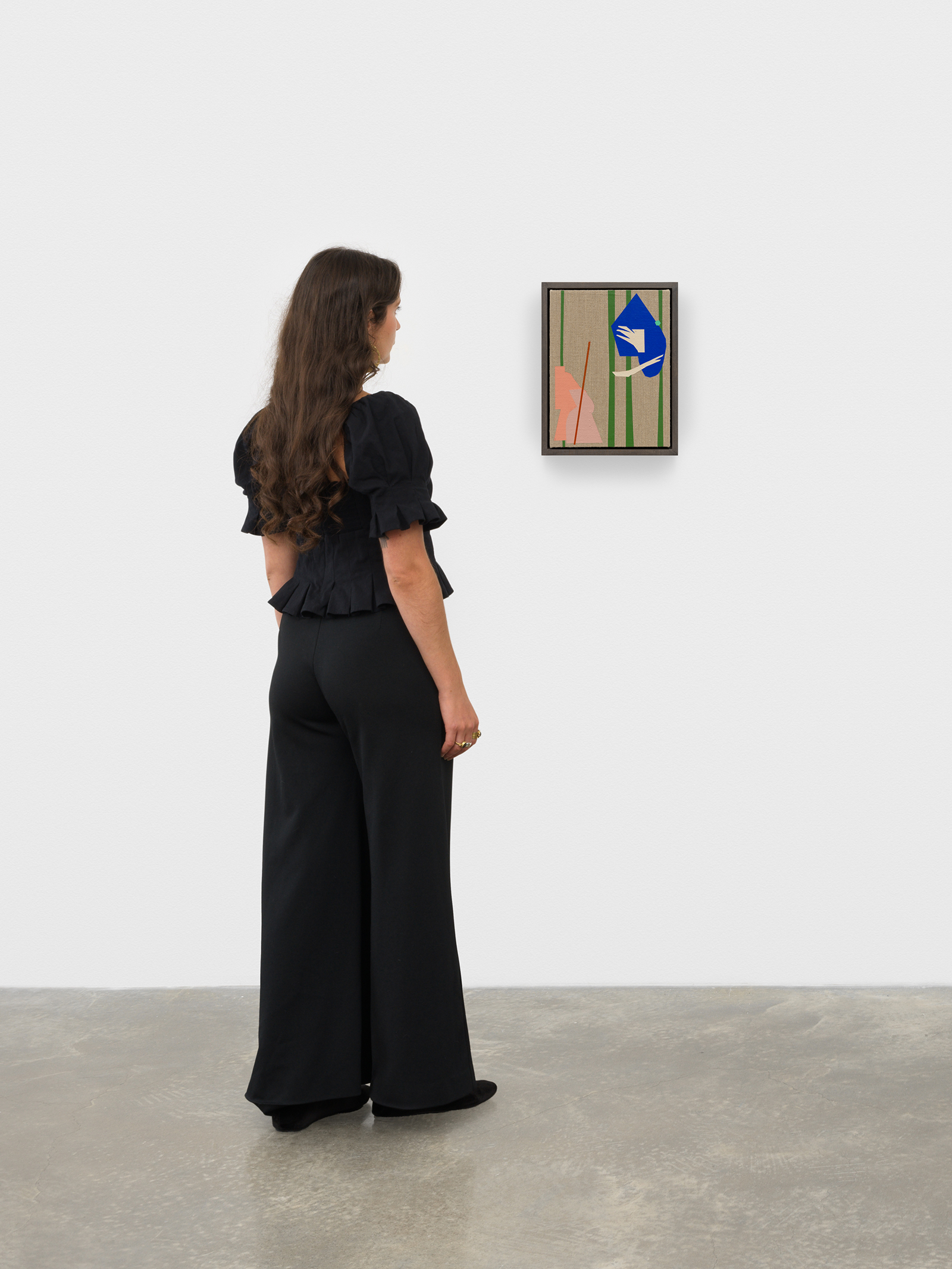
A cautionary word / an open path (2026) captures a distilled interaction between two groups of forms that gather at opposing corners of the composition against a backdrop of repeated vertical lines. Across scales, Kent’s motifs—like language, thought, or feeling—evolve while retaining the imprint of their first impulse. These paintings are not puzzles to be solved, but presences to keep company with.